If you’ve ever stood in the garden staring at a roll of welded wire mesh, wondering if it’s the right size to keep your dog from turning your fence into a chew toy or a escape artist’s tunnel, you’re not alone. As a welded wire mesh supplier who’s fielded thousands of calls from pet owners, farmers, and fence contractors over the past 12 years, this question is by far the most common—and for good reason: pick the wrong size, and you’ll spend months patching gaps, chasing your dog through the neighborhood, or worse, having to tear out and re-install a fence that doesn’t work. Welded Wire Mesh
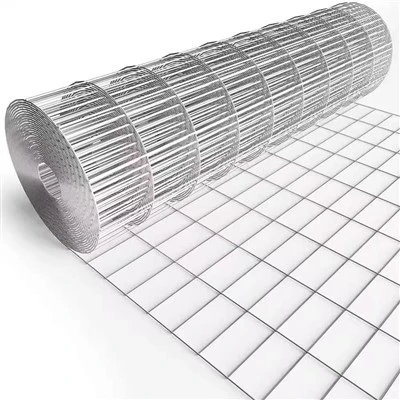
Let’s start with a fact most people don’t realize: not all welded wire mesh is made the same, and the “right size” depends entirely on three things: your dog’s size, age, and behavior. A Chihuahua puppy has way different needs than a 150-pound Great Dane, and a dog that loves to burrow under fences can’t be contained with the same mesh as one that just likes to patrol the yard. Over the years, I’ve seen people grab a cheap mesh from the hardware store because it’s the cheapest, only to find their 60-pound border collie slipping through a 2×4 inch gap, or their retriever chewing through 12-gauge wire like it’s a stick. That’s why I always tell customers: size isn’t just a number—it’s the difference between a fence that works and one that’s just a fancy yard ornament.
First, let’s break down the basics of welded wire mesh sizing. When we talk about mesh for fencing, we’re usually referring to two measurements: the gap size (the space between the wires) and the wire gauge (the thickness of the wire itself). A lot of people mix these up, and that’s where mistakes happen. Let’s start with gap size, because that’s what actually keeps your dog in. The general rule of thumb here is: the gap should be smaller than the width of your dog’s head. That’s the golden rule. A dog can usually squeeze through a gap that’s roughly the size of its skull—if the gap is bigger than that, escape is just a matter of patience.
Let’s test that rule with common dog sizes. For toy breeds and small dogs—like Chihuahuas, Yorkies, or Maltese, who weigh under 15 pounds—their heads are tiny. A gap of 1×2 inches is perfect for these guys. Wait, I know what you’re thinking: that’s really small. But think about it: a Chihuahua’s head is only 1 to 1.5 inches wide, so a 1×2 gap means they can’t slip through. I’ve had a customer with two Maltese go through three different mesh sizes before they landed on 1×2 inches—their old 2×3 inch mesh had gaps big enough for them to squeeze through, and they’d end up napping on the neighbor’s porch. That rule holds for small puppies too, even if they grow into big dogs. If you’re getting a puppy and don’t know their adult size, it’s better to go smaller on gaps first, because puppies can fit through spaces you’d never expect. I see this mistake all the time: someone puts a 2×4 inch mesh for their 8-week-old golden retriever, and a month later, the puppy is already big enough to fit through that gap, and they’re out chasing squirrels.
For medium-sized dogs—think border collies, beagles, cocker spaniels, who weigh between 20 and 50 pounds—their heads are 2 to 3 inches wide. That means a gap of 2×3 inches is the sweet spot here. I’ve had a lot of border collie owners come to me frustrated because their dogs are intelligent escape artists; I always warn them that medium dogs can figure out how to push through gaps, so a 2×3 inch gap is non-negotiable. If you go to 3×3 inches, a border collie can usually squeeze through that, especially if they’re motivated by something on the other side. Beagles are another tricky medium breed; they love to stick their heads through gaps, and if the gap is too big, they’ll get stuck—and that’s a whole other problem you don’t want to deal with.
Now for large and giant breeds—Great Danes, German shepherds, Rottweilers, who weigh over 50 pounds. Their heads are 3 to 5 inches wide, so the gap here should be 3×4 inches, max. Wait, some people will try to use 4×4 inches for big dogs, but I’ve seen a 100-pound Rottweiler squeeze through a 4×4 inch gap when they were spooked by a thunderstorm. That gap is just big enough for their skull, and once they get their head through, their body follows. It’s not about the dog’s weight—it’s about the width of their head. I once had a Great Dane owner try 5×5 inch mesh because it was cheaper, and within a week, their dog had escaped and wandered three miles away. That’s a cost they never would have saved with the cheap mesh. The 3×4 inch gap is the standard for large breeds, and for giant breeds over 100 pounds, you might even want to go down to 3×3 inches, just to be extra safe.
But gap size isn’t the only factor—wire gauge matters too, and that’s where a lot of people cut corners, which leads to broken fences. Welded wire mesh is made with wire that’s measured in gauge: the lower the number, the thicker the wire. So 11-gauge wire is thicker than 16-gauge, for example. For dog fencing, you need a wire that’s strong enough to stand up to chewing, scratching, and even a dog ramming into the fence. A lot of hardware stores sell 16-gauge mesh for cheap, but that’s only good for small dogs that don’t chew. A medium or large dog can chew through 16-gauge wire in a matter of days. I always recommend 12-gauge wire as the minimum for any dog fencing, and for large and giant breeds, 10-gauge wire is even better. I had a customer with two 80-pound German shepherds try the 12-gauge mesh first, and within two weeks, they’d chewed through three sections. Switched to 10-gauge, and three years later, the fence is still intact. That’s the difference between doing it once and doing it right.
There’s another behavior factor to consider too: burrowing. Some dogs, like terriers, dachshunds, and even retrievers, love to dig under fences. No matter how small the gaps are above ground, if your dog can dig under the mesh, they’ll escape. So for these dogs, you don’t just need the right mesh size above ground—you need to extend the mesh below the soil. I always tell these customers to bury the bottom 6 to 12 inches of the mesh, or to use mesh with a 12-inch wide “skirt” that sticks out from the bottom of the fence, angling away from the yard. That way, if your dog starts digging under, they’ll hit the mesh skirt instead of the ground, and they’ll get discouraged. I’ve seen terrier owners go with the standard 2×3 inch mesh for their dogs, but not add the bottom skirt, and end up with a hole in their fence within a month. That’s an easy fix, but it’s one a lot of people don’t think about when they’re choosing the mesh size.
Let’s also talk about permanent vs. temporary fencing. If you’re renting a place and just need a temporary fence for a puppy or a small dog, you can go a little smaller on wire gauge, but still stick to the gap size rule. I’ve sold 14-gauge mesh for temporary use, but only for small dogs that don’t chew. For permanent fencing, it’s worth the extra cost to get the thicker gauge mesh—it’ll last longer, save you money on repairs, and keep your dog contained for years.
Now, let’s clear up a common myth: some people think chain link is better for dog fencing, but chain link has larger gaps at the bottom, which is where dogs escape most. Welded wire mesh has uniform gaps, so there’s no big section at the bottom that a dog can slip through. That’s why welded wire mesh is my preferred choice for dog fencing, especially when you get the size right.
I remember a customer last year who had a 70-pound lab mix that kept escaping through their old 4×4 inch chain link fence. They tried everything—fencing it, adding a coyote roller, even hiring a trainer—nothing worked. They came to me, and I recommended 3×4 inch welded wire mesh with 12-gauge wire, and added a 12-inch skirt at the bottom. Six months later, they told me it was the first fence that had kept their lab in. They said they’d wasted hundreds of dollars on other solutions, but getting the right mesh size made all the difference. That’s the story that keeps me going, because I know how stressful it is to have a dog that won’t stay in the yard.
So let’s recap, to make it easy:
- Small dogs (under 15 lbs): Gap size 1×2 inches, wire gauge 14-gauge minimum (12-gauge better for durability).
- Medium dogs (20-50 lbs): Gap size 2×3 inches, wire gauge 12-gauge minimum, add a bottom skirt if they burrow.
- Large/giant dogs (over 50 lbs): Gap size 3×4 inches, wire gauge 10-gauge minimum, definitely add a bottom skirt for diggers.
- If you have a puppy, always err on the smaller gap size—puppies grow fast, and it’s cheaper to adjust the mesh size early than to replace the fence later.
I know choosing the right mesh size can feel overwhelming, especially when there are so many options out there. That’s why I’ve spent 12 years working with customers to match their specific needs to the right product. I don’t just sell mesh—I give advice, because I’ve seen what happens when you pick the wrong size. A fence isn’t just a barrier; it’s where your dog spends most of their day, and it needs to keep them safe and contained.
If you’re not sure what size is right for your dog, or you have questions about wire gauge, skirt extensions, or installation, don’t hesitate to reach out. I’m always happy to walk you through the options, whether you’re fencing a small backyard for a Chihuahua or a large farm for a Great Dane. Getting the right welded wire mesh size doesn’t have to be complicated—you just need to know what to look for, and who to ask for advice.
It’s worth taking the time to get this right. The alternative is endless frustration, lost weekends chasing your dog, and money wasted on fences that don’t work. I’ve seen it too many times, and I don’t want that to happen to you. So take a minute to measure your dog’s head, think about their behavior, and choose the mesh size that fits. Your dog will thank you (and your neighbor will too).
Wire Mesh Cable Tray For more information on welded wire mesh specifications, animal fencing standards, and behavior-based fencing solutions, refer to the following sources: American Fence Association Guidelines for Residential Pet Fencing, 2022; Livestock and Pet Fencing Best Practices, National Agricultural Library, 2021; Canine Behavioral Insights Related to Fencing Containment, Journal of Applied Animal Behavior Science, 2020.
Hebei Shenyi Metal Products Co., Ltd.
Hebei Shenyi Metal Products Co., Ltd. is one of the most professional welded wire mesh manufacturers and suppliers in China, featured by quality products and good service. Please rest assured to wholesale durable welded wire mesh in stock here and get free sample from our factory. Customized orders are welcome.
Address: Gengtun Industrial Zone, Gengtun Village, Xiliangwa Township, Anping County, Hengshui City, Hebei Province
E-mail: HBshenyi@outlook.com
WebSite: https://www.shenyimetal.com/
