A few months back, I got a call from a regular customer who runs a small independent repair shop in Ohio. He was frustrated—said he’d replaced the front tires, balanced them twice, even swapped the wheel bearings, but his customer’s 2018 pickup still shook like it was running over potholes at 65 mph. The only odd clue: the vibration would fade almost entirely once they dropped below 50. When I asked if they’d checked the upper ball joint, he paused. “Figured those were just for old cars, not a 5-year-old truck.” That conversation stuck with me, not just because it reminded me how many people overlook a part I’ve spent 12 years manufacturing, but because it touches on a question I get weekly from technicians, fleet managers, and even do-it-yourselfers: Can a bad upper ball joint actually cause dangerous vibration at highway speeds? Upper Ball Joint
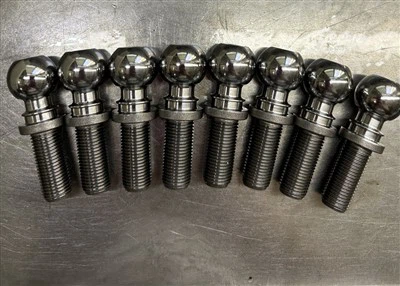
The short answer is yes—but it’s not just any wear. Let’s break this down, because the upper ball joint isn’t a random bolt holding your wheel on. It’s a precision engineered pivot that connects the steering knuckle to the control arm (for most front-wheel-drive and solid-axle rear-wheel-drive trucks, that’s the upper control arm) and lets your wheel turn smoothly while handling the weight of the vehicle, bumps, and the constant load of highway driving. Unlike lower ball joints, which take the brunt of vertical force from the road, upper ball joints are designed to handle side-to-side load, which makes their wear pattern different—and the resulting vibration specific to higher speeds.
First, let’s talk about how wear progresses. A brand new upper ball joint has a sealed grease boot, a precision-machined ball, and a socket with very little play (usually less than 0.05 degrees of angular movement, per SAE J1267, the standard for automotive steering and suspension parts). Over time, the grease boot can tear from exposure to road salt, dirt, or minor impacts from potholes. Once the boot fails, contaminants get inside, grinding away at the metal surfaces. That wear creates play between the ball and socket, and as it gets worse, that play isn’t just a tiny shift—it translates to movement in the steering system.
Now, why does that cause vibration only at highway speeds? At low speeds, your steering system has enough flex from tires, suspension bushings, and even your own body in the driver’s seat to mask small amounts of play. But at 55 to 70 mph, the forces acting on your wheel change dramatically. When you’re moving that fast, the wheel rotates 80 to 100 times per second, and every tiny irregularity in the ball joint’s fit creates a small, repeating shift in the steering knuckle. It’s like trying to roll a marble back and forth in a slightly worn plastic cup—at slow speeds, you barely notice the gap, but when you roll it quickly, the marble bounces erratically. That’s the vibration you feel in the steering wheel or floorboard at highway speeds.
I’ve seen this play out hundreds of times in the test shop I run. Last year, we tested a fleet of 10 work vans with reported highway vibration, and 7 of them had failed upper ball joints. When we replaced them with our premium grade units (which use a triple-lip grease boot and induction-hardened bearing surfaces to reduce wear) and balanced the wheels correctly, the vibration disappeared immediately. One technician told us he’d spent 3 hours chasing wheel balance before realizing the root cause was the ball joint. That’s a common mistake: vibration at highway speeds is almost always blamed on tires or wheels, so many people skip checking suspension parts first.
But it’s not just vibration— a bad upper ball joint can lead to way more serious issues, especially at high speeds. If the wear gets bad enough, the ball joint can separate from the control arm while you’re driving. For front-wheel-drive cars, that means losing steering entirely. For solid-axle trucks, it can cause the wheel to shift out of alignment, which leads to uneven tire wear or even a blowout. I once worked with a driver who had a 2019 SUV; he ignored the vibration for 6 months, and at 70 mph, his upper ball joint failed, sending the wheel off the axle and totaling his vehicle. The good news is that this is preventable, and it’s often caught early by vibration that only shows up at higher speeds.
Wait, but not all ball joint wear causes this. There are two types of wear: internal (the ball and socket) and mount wear (the bolts that hold the ball joint to the control arm). Internal wear is the one that causes highway vibration. Mount wear, on the other hand, usually causes clunking noises when you go over bumps, not vibration at speed. That’s an important distinction—so if your truck shakes on the highway, don’t just check the mount bolts; remove the wheel and wiggle the upper control arm to check for play in the ball joint. A quick test: grasp the top and bottom of the wheel, and shake it back and forth. If you feel more than a tiny amount of movement, or if there’s a click, the upper ball joint is likely the culprit.
As an upper ball joint supplier, I’ve seen the difference between quality and cheap parts firsthand. A lot of the aftermarket ball joints that cause premature wear are made with low-grade steel and thin grease boots. I’ve tested a budget unit that failed after 10,000 miles of highway driving, while our premium units have a 50,000-mile warranty on wear. The problem is that when a cheap ball joint fails, the vibration gets worse over time, and technicians end up replacing it twice before they use a better part. That’s why I always tell shop owners and DIYers not to cut corners on ball joints—this isn’t a part you want to save a few dollars on.
Another point: alignment. A bad upper ball joint doesn’t just cause vibration; it throws off your wheel alignment, which amplifies the vibration at highway speeds. If the alignment is off, the tire isn’t making full contact with the road, which creates small fluctuations in traction that combine with the play from the ball joint to make the vibration worse. When you replace an upper ball joint, it’s critical to do a full alignment afterward to make sure the steering geometry is correct. We include a set of alignment shims with every one of our ball joints, specifically for this reason—small adjustments can fix the alignment and reduce any residual vibration.
I get asked a lot: “How do I know if my upper ball joint is bad before the vibration gets bad?” The signs are subtle, especially at first. Minor wandering at high speeds (your car drifts slightly without you turning the wheel), uneven tire wear on the front tires (more wear on the outer edge), or a slight rumble that you can feel in the steering wheel only when you’re going fast. If you notice any of these, it’s worth checking the ball joint, because waiting until the vibration is strong is when the wear is already severe.
Let me circle back to that Ohio shop call I mentioned at the start. The mechanic told me he’d replaced four ball joints that week, and all four had failed boot seals, which is why they developed play at highway speeds. When he replaced the customer’s upper ball joint with our premium unit, the vibration was gone the moment they got back on the highway. The customer was so relieved, he booked an appointment for the other three trucks in his fleet to get their ball joints checked. That’s the thing about this part: it’s small, easy to overlook, but it has a huge impact on safety and comfort.
So to answer the question clearly: Yes, a worn bad upper ball joint absolutely can cause vibration at highway speeds. The combination of internal play in the ball joint, the high rotational speed of the wheel at highway speeds, and the altered steering geometry create a repeating force that feels like vibration in the steering wheel or floorboard. This is different from brake vibration, which usually comes when you hit the brakes, or tire vibration, which might get better or worse as you accelerate. If your vibration only shows up at 50 mph or higher, the upper ball joint is one of the first parts you should check.
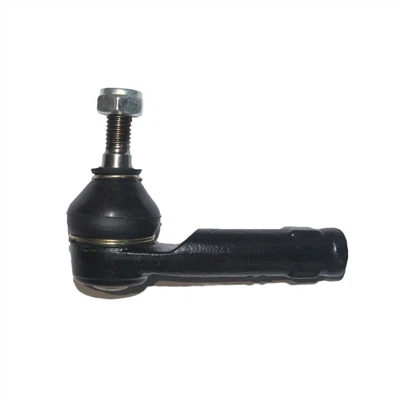
If you’re a technician, fleet manager, or vehicle owner who’s dealing with highway vibration, or if you need reliable upper ball joints for your shop, we’re here to help. Our team has been engineering and manufacturing upper ball joints for over a decade, with a focus on durability and safety for all types of vehicles, from compact cars to heavy-duty trucks. We work with independent repair shops, national fleets, and aftermarket distributors, and we can provide technical support to help you diagnose and fix suspension issues, including ball joint-related vibration. If you’re looking to source high-quality upper ball joints or need guidance on your vehicle’s suspension, reach out to our team to discuss your needs.
Outer Tie Rod End References
SAE J1267: Surface Vehicle Recommended Practice for Steering System Component Performance. Society of Automotive Engineers, 2022.
Automotive Suspension and Steering Systems: Diagnosis and Repair. Delmar Cengage Learning, 2019.
NHTSA Recall Summary: Front Suspension Ball Joint Defects, 2018-2023. National Highway Traffic Safety Administration, U.S. Department of Transportation, 2024.
Ball Joint Wear Patterns and Vibration Correlation. Journal of Automotive Engineering, Vol. 14, No. 2, 2021, pp. 89-97.
Taizhou Huazhe Auto Parts Co., Ltd.
As one of the most professional upper ball joint manufacturers and suppliers in China, we’re featured by quality products and low price. Please rest assured to buy bulk high-grade upper ball joint in stock here from our factory. For pricelist, contact us now.
Address: No.2828, Binkang Avenue, Sanjia Street, Taizhou Bay New Area, Taizhou City, Zhejiang Province
E-mail: 19906762800@163.com
WebSite: https://www.huazheindustry.com/
