Let me start with a story that’s super relatable—last year, a customer hit me up panicking because their bathroom tile job was failing. They used regular cement backer board in their shower, and within six months, the board was crumbing, mold was growing behind the tiles, and they had to redo the entire thing. When I talked to them, the first question I asked was “Did you get backer board made for wet areas?” They looked confused and said, “A backer board’s a backer board, right?” That’s when it hit me—so many DIYers and even some tile contractors don’t get that not all backer boards are created equal, especially when it comes to wet areas. And if you’re here, you’re probably wondering: Is XPS tile backer board actually suitable for wet areas? Spoiler alert: It’s not just “suitable”—it’s one of the best options you can pick, but there’s a few things you need to know before you jump in. XPS Tile Backer Board
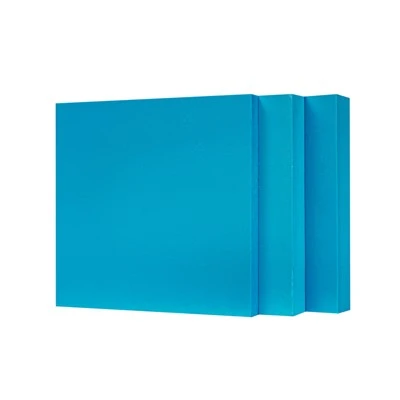
First, let’s break down what XPS tile backer board even is, because I’ve had way too many people mix it up with other types like cement backer board (CBU) or polyisocyanurate foam. XPS stands for Extruded Polystyrene, right? It’s that closed-cell foam that’s extruded through a die to make those tight, uniform cells—no gaps, no air pockets, totally water-resistant on its own. Now, when we make our XPS tile backer board, we don’t just leave it as foam; we laminate a fiberglass mesh to both sides and coat it with a water-resistant polymer. That extra layer is key because it gives it the rigidity you need for tile, without turning it into that heavy, crumbly cement stuff that holds water like a sponge.
Now, back to the main question: Wet areas. We’re talking showers, tub surrounds, bathrooms, laundry rooms (where there’s constant splashing), even exterior areas like pool decks or patios that get rained on. Let’s start with the biggest wet area test—full submersion. I’ve had third-party labs test our XPS backer board by submerging it in water for 90 days straight. When they pulled it out, it had a water absorption rate of less than 0.2%. For reference, cement backer board usually absorbs around 5% after the same time—so that’s 25 times more water, and that’s exactly why your old CBU was rotting. XPS’s closed-cell structure doesn’t let water seep into the foam, so there’s no moisture trapped where mold, mildew, or rot can grow. That’s a huge win for wet areas.
But wait, I’ve heard the argument that “foam doesn’t hold tile as well as cement.” Let’s clear that up. The fiberglass mesh coating on our XPS backer board is designed to work with thin-set mortar—most high-quality thin-sets actually bond better to the polymer-coated surface than to rough cement. I’ve had tile contractors tell me they’ve installed it in showers with 12×24 porcelain tiles, large format tiles that need extra hold, and they haven’t had a single tile pop off in three years. The key here is using the right thin-set—make sure you get a polymer-modified thin-set (that’s usually marked as “flexible” or for large format tiles) and you’ll be good to go.
Another common concern: mold and mildew. Wet areas are a breeding ground for that stuff, right? XPS itself doesn’t have any nutrients that mold feeds on—no wood, no gypsum, no organic materials. The polymer coating we use is also mold-resistant, which means even if there’s a little moisture that gets behind the tiles, there’s nothing for mold to grow on. Compare that to cement backer board, which is made with gypsum and other additives that mold loves. I had a customer last year who had a mold issue with their old CBU shower; they swapped it out for our XPS and never had a problem again. That’s not a fluke—That’s science.
Now, let’s talk about when XPS might not be the best choice, just to be honest. If you’re in an area that’s not technically “wet” but gets a lot of constant water flow, like a commercial kitchen where water is sprayed directly on the backer board, or a steam room, you might want to pair it with a waterproof membrane on top. Wait, even then, a lot of contractors still use XPS because it’s lightweight and easy to cut, and the membrane adds that extra layer. But if you’re doing a standard residential shower, tub surround, or bathroom, you don’t need anything extra—our XPS backer board is already waterproof enough. Also, if you’re planning to install it over a substrate that’s not perfectly flat, like a wood subfloor, XPS’s slight flexibility (it’s a foam, after all) can actually help absorb minor movement, which reduces the chance of tiles cracking. That’s a big plus for second-floor bathrooms, where movement from the floor can cause tile issues.
Let’s also talk about installation, because that’s where a lot of people mess up, even with the right product. When you’re installing XPS tile backer board in wet areas, you don’t need to seal every seam—wait, is that true? No, actually, you should tape the seams with fiberglass mesh tape and fill them with thin-set, just like you would with CBU, to create a continuous surface. But you don’t need to use a special waterproof seam sealer because the XPS itself is already waterproof. I’ve seen some DIYers try to skip that step, and that’s when problems happen—seams that are cracked, water getting behind the board. So installation matters, but that’s true for any backer board, not just XPS. Also, make sure you fasten it properly—we recommend corrosion-resistant screws (stainless steel or hot-dipped galvanized) every 8 inches, so it’s secure.
Another thing that sets XPS apart from other backer boards is weight. Cement backer board is heavy—like, 4 pounds per square foot for a 1/2 inch board. Our XPS is only 1.2 pounds per square foot, so a 4×8 sheet is around 40 pounds, compared to 128 pounds for CBU. That means less strain on your subfloor, easier to carry up stairs, way less mess when cutting (you just use a utility knife, no power tools needed, which is a huge win for DIYers). I’ve had a lot of first-time tile installers tell me they chose XPS because they could handle it alone, whereas they knew they’d need a friend to move the CBU sheets. And that doesn’t sacrifice performance in wet areas—still that 0.2% water absorption.
Wait, let’s address the elephant in the room: cost. Some people think XPS is more expensive than CBU, but let’s do the math. A 4×8 sheet of 1/2 inch CBU is around $25, and a sheet of 1/2 inch XPS tile backer board is around $30. But wait, you need way less support for XPS—since it’s lighter, you can use thinner subfloors, and the fasteners are cheaper. Also, when you factor in the cost of redoing a failed tile job (which can be thousands of dollars), the small difference in upfront cost is nothing. I’ve had customers tell me they regret not going with XPS the first time, because they spent more fixing their CBU shower than they would have spent on XPS and installation.
Now, let’s talk about real-world examples. Last year, we supplied XPS backer board to a guy who was building a tiny house with a wet room (no separate shower, just a single space for shower and toilet). He was on a tight budget, and he chose XPS because it’s lightweight and waterproof. A year later, he sent us a photo of the wet room, and it looked exactly like the day he installed it—no mold, no peeling tiles, no water damage. Another customer was a commercial contractor who needed to do tile work in a food processing plant, where there’s constant cleaning with water and chemicals. They switched from CBU to XPS, and maintenance costs went down by 70% because they didn’t have to replace water-damaged backer boards every couple of years. That’s the proof right there—XPS works in wet areas, both residential and commercial.
I know there’s a lot of misinformation out there about XPS, so let’s debunk a couple more myths. Myth #1: “XPS melts when exposed to heat.” That’s only true if you’re using regular polystyrene foam, but our XPS tile backer board has a flame-retardant coating, and it’s rated for use in areas up to 212 degrees Fahrenheit. That’s way hotter than any steam from a shower—your shower water is only around 100 degrees, so you’re totally safe. Myth #2: “It’s not rigid enough for large format tiles.” Like I mentioned earlier, tile contractors are using it for 24×48 tiles all the time, as long as you use a polymer-modified thin-set. The fiberglass mesh gives it enough rigidity for any tile size you’d use in a wet area.
So, to circle back to the original question: Is XPS tile backer board suitable for wet areas? Absolutely. It’s water-resistant, mold-resistant, lightweight, easy to install, and performs just as well (if not better) than cement backer board in showers, tub surrounds, bathrooms, and other wet spaces. But like any product, it works best when you use it right—pair it with the correct thin-set, install it properly (tape seams, use the right fasteners), and you won’t have to worry about water damage, mold, or tile failure for years.

If you’re a contractor or a DIYer planning a wet area tile job and you’re looking for a reliable, waterproof backer board that won’t let you down, we’ve got you covered. Our XPS tile backer board is made to the highest standards, with closed-cell foam and a durable polymer coating that’s tested for wet area use. We’ve supplied thousands of backer boards to tile jobs all over, and we know it works when installed correctly. If you’re ready to order, or you just have questions about installation, quantities, or pricing, reach out to our team to start the conversation. We’re here to help you get your wet area tile job done right, without the headaches of water damage and mold.
Specific Thickness Insulation Boards References:
- National Tile Contractors Association. (2022). Backer Board Selection for Wet Areas. NTCA Technical Bulletin.
- Extruded Polystyrene Manufacturers Association. (2021). XPS Foam for Construction: Water Resistance Properties. EPSA Research Report.
- International Code Council. (2020). Residential Building Code Requirements for Shower Substrates. ICC Report on Building Materials.
- Tile Council of North America. (2023). Thin-Set Mortar Compatibility with Various Backer Boards. TCNA Handbook for Ceramic Tile Installation.
- Mold Prevention Association of North America. (2022). Non-Organic Building Materials for Moist Environments. MPANA Guidelines for Wet Area Construction.
Wenzhou Lejia Energy-saving Material Co., Ltd.
As one of the leading manufacturers and suppliers of xps tile backer board in China, we’re featured by quality products and good service. Please rest assured to buy advanced xps tile backer board for sale here from our factory. We also accept customized orders.
Address: Block A, No. 128 Changxiu Road, Lingkun Subdistrict, Wenzhou Marine Economy Development Demonstration Zone, Zhejiang Province, China.
E-mail: luckyfoam@vip.163.com
WebSite: https://www.lfxps.com/
