Hey there, fellow electricians and toolheads! Let’s cut to the chase—you probably grab your tools without overthinking them, right? When was the last time you stopped to wonder if your electrician’s scissors needed calibrating? If you’re like most folks in the trade, it’s probably never. That’s where we come in: we’re the team behind Electrician’s Knives & Scissors, and we spend every day obsessing over what makes these tools work (or not work) for the people who rely on ’em. So let’s break this down, no stuffy jargon, just real talk about a question that’s bugged way more tradespeople than you’d think. Electrician’s Knives & Scissors
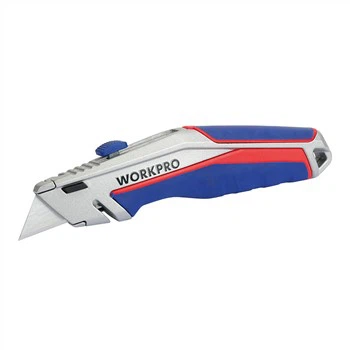
First off, let’s make sure we’re on the same page about what we’re talking about here. Regular scissors are for cutting paper or fabric, but electrician’s scissors? These bad boys are built for the job: stripping insulation from low-voltage wires, cutting cable jackets, snipping heat shrink, even trimming small electrical tape. Their blades are usually stainless steel, have a slight curve for getting into tight spots, and are often spring-loaded so you don’t wear out your hands mid-job. Calibration, though, that’s a word that gets thrown around for power tools or big machinery, right? So can a pair of handheld scissors even be calibrated? Spoiler: yes, and it matters more than you might believe for electrical work.
Wait, let’s get one myth outta the way first. A lot of electricians think if their scissors “still cut something,” they’re fine. Nope. Here’s why that’s a costly (and even dangerous) mistake. When your electrician’s scissors are out of whack, two things go wrong: they don’t cut clean, and they can damage the wire or component you’re working on. Think about it—if you’re stripping a 14-gauge copper wire for a house remodel, a dull, misaligned blade will tear the insulation instead of slicing it smoothly. That leftover plastic fragment can cause a short circuit later, which means callbacks for you, or even worse, a fire hazard for the homeowner. Or if you’re cutting thick armored cable, a misaligned pair might leave burrs on the metal jacket, which can scratch your wire insulation over time. We’ve had so many customers come to us saying their old scissors ruined a whole spool of wire—all because they skipped checking calibration.
Now, how do you actually tell if your electrician’s scissors are calibrated? It’s not rocket science, and you don’t need a lab to test it. Grab a piece of the exact insulation you work with most (say, 12-gauge THHN) and try to strip a ½-inch section. If you have to work the scissors twice, or the insulation tears instead of peeling off in one clean strip? That’s a red flag. Another quick test: hold the blades up to a light. If there’s a gap between the top and bottom blade when you close ’em fully, especially near the pivot point? That’s calibration drift, plain and simple. Even a tiny gap—like 0.01 inches—might not look like much, but it’s enough to mess up every cut you make on wire insulation.
So why do electrician’s scissors go out of calibration in the first place? It’s not because they’re cheap tools (though a lot of off-brand ones are flimsy). Even high-quality pairs from reputable brands take a beating on job sites. You drop ’em off a ladder (guilty, we’ve all done it), you leave ’em in your tool bag with wrenches that tap against the blades all day, you use ’em to cut things they weren’t meant for—like copper pipe or a steel nail (we’ve seen that too, and cringed every time). Over time, the pivot screw loosens just a little, or the stainless steel blades get tiny dings that throw the alignment off. It’s not a defect, it’s just wear and tear from real job use.
Now, how often should you calibrate ’em? That depends on how hard you use ’em. If you’re a commercial electrician pulling 50 hours a week, you should check calibration after every big job, or at the very least once a month. If you’re a residential electrician doing a couple small jobs a week, every three months is fine. And if you drop ’em or use ’em on something they shouldn’t? Stop, check calibration, before you pick ’em back up. Trust us, we’ve had customers who calibrated once a year and didn’t have a single insulation tear for six months—game changer.
Wait, but can you calibrate them yourself at home, or do you need to send ’em out? Good question. There are a few DIY hacks that work, and a few things that don’t. Let’s start with what works: first, tighten the pivot screw a little. That’s the easiest fix for a gap between blades. Grab a small Allen wrench (most electrician’s scissors use a 1/8-inch or 5/64-inch Allen bolt for the pivot) and turn the screw just a quarter turn clockwise. Test the cut—if it’s still off, turn another quarter, but don’t over-tighten! If you crank that screw too hard, you’ll make the blades bind, and that’s worse than a small gap. Another DIY trick: if the blades have tiny burrs or nicks (super common), you can use a fine sharpening stone (1000-grit or higher) to lightly hone the cutting edges, then re-align the pivot. Hold the blades closed against the stone, move ’em in a gentle figure-eight, and don’t take off too much metal—you just want to smooth out the burrs.
But here’s the thing: DIY fixes only go so far. If your scissors are bent really bad from a big drop, or if the pivot is stripped, you can’t fix that at home. And if you’re not comfortable messing with the pivot screw (easy to strip the threads if you’re not careful), sending ’em to a professional is the way to go. Most tool repair shops do this for $10-$15, which is way cheaper than buying a whole new pair, and way cheaper than fixing a mistake from a misaligned pair. We’ve also noticed that a lot of people skip calibration because they think it’s too much work—but it’s a 5-minute check that saves you hours of callbacks, ruined wire, and sore hands from forcing bad cuts.
Now, let’s talk about our side of things—we’re Electrician’s Knives & Scissors, so we make tools that are built to handle the job, but we’re realists. We know no tool is indestructible. That’s why all our scissors come with a quick calibration guide right in the box, and we even include a free Allen wrench for the pivot screw. We get a lot of customers who email us saying, “My new pair was cutting great, now it’s not—what’s wrong?” And 9 times out of 10, they just loosened the pivot screw in their tool bag, no big deal. It’s the little things, y’know?
Wait, let’s address a common pushback: “I don’t have time to calibrate my scissors. I just need to get the job done.” We hear that every day, but here’s a story we had last year that stuck with us. A journeyman electrician named Mike from Chicago reached out to us—he was working on a remodel of an old office building, had a pair of scissors he’d had for 8 years, was skipping calibration because he was cramming jobs in. One day, he tried to strip a 2/0 wire, and the scissors tore the insulation so bad, the wire shorted inside the wall. He had to tear out a section of drywall, re-strip the wire, and lost 3 hours of time—time he could’ve been billing, or spending with his family. He ended up calibrating his old scissors (turns out the pivot screw had loosened) and said it saved him way more time than the 5 minutes it took. That’s the real cost of skipping calibration: it’s not just a bad cut, it’s downtime, callbacks, and stress.
Another myth: “Only cheap scissors need calibration.” Let’s bust that right now. We’ve seen $50 professional electrician scissors go out of calibration in 2 months because a guy dropped ’em from a 10-foot ladder. We’ve also seen $10 off-brand scissors stay aligned for a year because the guy using ’em was careful and checked the pivot every week. Calibration has nothing to do with price—it has to do with use. No matter what your scissors cost, they’re going to shift a little with job site wear.
So, what’s the bottom line here? Electrician’s scissors absolutely do need to be calibrated—just like your multimeter needs a check, or your drill bit needs sharpening. It’s not a fancy, complicated process, it’s a regular tune-up that keeps your tools working right, keeps your jobs on track, and keeps you from making costly mistakes. You don’t need a $100 calibration kit, you just need 5 minutes once a month, a small Allen wrench, and a quick look at your blades.
Now, if your scissors are past DIY fixes, or if you’re ready to invest in a pair that’s built to hold calibration (we swear by our stainless steel models, designed with a reinforced pivot that stays aligned even after heavy use), we’re here to help. We’ve worked with electricians of all levels—apprentices just starting out, master electricians running their own companies—and we know what works for real job sites. If you’ve got questions about calibrating your current pair, or want to chat about upgrading to a more durable set, hit us up. No sales pitches, just straight talk from people who get the trade.
At the end of the day, your tools are your right hand—you take care of ’em, they take care of you. Calibrating your electrician’s scissors is a small step that makes a huge difference. Don’t wait until you’ve torn a bundle of wire or spent 3 hours fixing a mistake. Grab your scissors, do the light test, check the pivot screw, and get ’em calibrated. You’ll be glad you did.
Insulated Tools References:
- Occupational Safety and Health Administration (OSHA). Electrical Tool Safety Guidelines for Construction and Maintenance. U.S. Department of Labor, 2022.
- National Electrical Code (NEC). Handbook for Electrical Tools and Equipment Alignment. National Fire Protection Association, 2023.
- Tool and Manufacturing Engineers Handbook (TMEH). Maintenance and Calibration of Handheld Cutting Tools. Society of Manufacturing Engineers, 2021.
Hangzhou GreatStar Industrial Co., Ltd.
Hangzhou GreatStar Industrial Co., Ltd. is one of the most professional electrician’s knives & scissors manufacturers and suppliers in China, specialized in providing high quality products and service. We warmly welcome you to wholesale high-grade electrician’s knives & scissors at competitive price from our factory. Contact us for pricelist.
Address: No. 35, Jiuhuan Road, Jiubao Town, Hangzhou, China
E-mail: sales@workprotool.com
WebSite: https://www.workprotool.com/
