Hey there, if you’ve ever been browsing for new patio doors, you’ve probably stumbled upon bifold doors at some point—they’re basically the ultimate in open-plan living, right? One of the questions I get asked literally every single week as a PVC glass door supplier is: “Can I actually use PVC glass doors for bifold doors?” Spoiler alert: The short answer is yes, but let’s break this down properly because there’s way more to it than just slapping some PVC glass into a folding frame. I’m gonna keep this real, no jargon, just the stuff I’ve learned from talking to homeowners, contractors, and DIYers for the past 8 years in this industry. PVC Glass Door
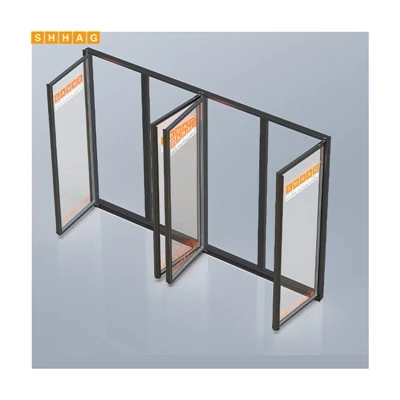
First off, let’s get one thing straight: Bifold doors aren’t a one-size-fits-all product. I’ve seen so many people assume that all PVC is flimsy, so bifold doors have to be aluminum or wood. Wait, no—modern PVC is nothing like the stuff your grandma’s old window frames were made of back in the 90s. Back then, PVC was cheap, yellowed in the sun, and couldn’t handle too much weight. But today? We use reinforced PVC profiles that are way sturdier, UV-resistant, and way more durable than people give them credit for.
As a supplier, I’ve worked with clients who wanted bifold doors for a sunroom, a small patio, even a tiny urban balcony, and PVC glass doors fit the bill perfectly for most of those spaces. The key here is matching the right PVC door components to the bifold system. See, bifold doors work by hinging panels together so they fold flat against the wall when opened—so they need frames that can support multiple panels, no sagging, and smooth operation every time you fold ‘em open and shut. That’s where our reinforced PVC profiles come in. We add steel reinforcement in the main frame and the individual panel frames, so they can handle the weight of large glass panes, which is non-negotiable for bifold doors. You don’t want a panel tilting down or sticking after a year of use.
Wait, let’s talk about the glass part too, because that’s the other big piece of the puzzle. When we supply PVC glass doors for bifold applications, we use insulated glass units (IGUs) — you know, the double or triple pane glass with a gas fill in between. Why? Because bifold doors have big glass areas, so energy efficiency is a huge concern. No one wants a patio door that makes their heating or cooling bills skyrocket. PVC itself is a great insulator, so pairing that with IGUs is a win-win. We also offer low-e coatings on the glass, which reflect heat back into your home in winter and block it in summer. That’s a big selling point for homeowners, especially in places with extreme weather.
But hold up—this isn’t for every bifold door project. Let’s be realistic here. If you need a super large bifold system, like 8 or 10 panels, spanning 20 feet or more, aluminum might be a better call because it has a higher strength-to-weight ratio for really big structures. But for most residential projects—like 2 to 6 panels, spanning up to 12 feet—PVC glass bifold doors work amazing, and they’re way more affordable than aluminum. I’ve had contractors tell me that PVC bifold doors are 20-30% cheaper than comparable aluminum ones, and homeowners love that savings.
Another big plus for PVC: low maintenance. Wood bifold doors need staining, sealing, repainting every few years. Aluminum can dent if something hits it, and it can get really hot in direct sunlight. PVC? Wipe it down with a damp cloth once a year, that’s it. It doesn’t fade—we use UV-stabilized PVC that stays white (or whatever color you pick) for decades. And the frames won’t rot, warp, or get termites, which is a huge deal if you’re in a humid area. I live in Florida, and we’ve supplied PVC bifold doors to customers here for 5 years now, and not a single one has had an issue with moisture damage. That’s unheard of with wood.
Wait, what about security? I know that’s a top concern for anyone installing exterior doors. Our PVC glass doors for bifold systems aren’t flimsy at all. We use multi-point locking systems on every panel—so when you lock the door, it latches at the top, bottom, and middle of each panel, not just a simple hook lock. The glass is also laminated for most applications, so even if someone tries to break it, it doesn’t shatter into dangerous pieces, and the laminate holds it together. That’s a big safety plus, especially if you have kids or pets.
But here’s the thing: not all PVC doors are created equal. As a supplier, I always warn people to steer clear of cheap PVC from no-name brands. The stuff you find at big box stores that’s super low-priced? That’s the old, unreinforced stuff that will sag, yellow, and break within a few years. We only work with manufacturers that make PVC profiles specifically designed for bifold use, not just regular PVC windows repurposed for doors. Those profiles have extra thickness, reinforced corners, and hardware that’s made to handle the constant folding motion. Regular PVC window hardware isn’t built for that—you’ll end up with squeaky hinges or panels that won’t close right after a year.
Let me share a quick customer story to make this real. Last year, a guy named Mike from Atlanta reached out to me. He’d just bought a townhouse with a tiny patio, and he wanted a bifold door to open up the living room to the outside. He’d gotten quotes for aluminum bifold doors that were like $4,500, which was way over his budget. I showed him our PVC glass bifold doors, and he was skeptical at first. We sent him a sample of the profile, he loved how sturdy it felt, and we quoted him $3,200 for the same size. He installed it 6 months ago, and he just sent me a text saying it works perfectly—no squeaks, no issues with the hot Atlanta sun, and his energy bill was $40 lower that month than the old single-pane door he had before. That’s the kind of win I live for as a supplier.
Now, what are the limitations? Let’s be honest, PVC isn’t for every job. If you live in a super cold climate, like Alaska, some people prefer aluminum because it conducts heat better, but wait—no, actually, the insulated glass and PVC’s insulating properties make PVC bifold doors hold up really well in cold weather too. I’ve had customers in Minnesota tell me they’re way more energy efficient than their old wood doors. The only real downside is that if you want a super wide, multi-panel system, PVC might not be the best because the frames can get too heavy if they’re made cheaply. But if you’re sticking to a standard residential size, PVC is totally fine.
Another thing: customization. I know people want their doors to match their home’s style. We offer PVC frames in white, gray, black, even wood-grain finishes. You can pick any glass tint—clear, frosted, tinted—to match your needs. So you don’t have to sacrifice style for durability or price. A lot of people think PVC is only white, but that’s so not true anymore.
Wait, let’s circle back to the original question: can PVC glass doors be used for bifold doors? Absolutely, as long as you get the right ones. The key is to go with a supplier that specializes in PVC glass doors, not just a general door company. They’ll know how to spec the right reinforced frames, the right hardware, and the right glass for your specific project. Don’t try to cut corners by using regular PVC doors—bifold doors have different structural needs.
If you’re in the market for bifold doors and you’re considering PVC, feel free to reach out to me or my team. We can answer all your questions, send you samples, or even help you figure out if PVC is the right fit for your space. We don’t do pushy sales—we just give honest advice, because we’ve been in this long enough to know that happy customers come back and refer their friends.
At the end of the day, bifold doors are all about opening up your space, letting in light, and making your home feel bigger. PVC glass doors can do that just as well as aluminum or wood, and they’re way more affordable, low-maintenance, and durable for most residential projects. The myth that PVC is only for cheap windows is just that—an old myth. Modern PVC is a high-quality material that’s perfect for bifold doors when done right.
So if you’ve been on the fence about whether to go PVC or another material for your bifold door, don’t sleep on PVC. It’s been a game-changer for so many of our customers, and we’ve never had a single complaint about the bifold systems we supply. If you want to chat more about your project, just get in touch with us—we’re here to help you pick the best door for your needs and budget.
Advertising Glass Door References:
- American Architectural Manufacturers Association. (2021). PVC Window and Door Performance Standards. AAMA 2021-19.
- National Association of Home Builders. (2022). Energy Efficiency of Exterior Door Materials. NAHB Research Center Report.
- Glass Magazine. (2023). Insulated Glass Units for Residential Bifold Applications. Vol. 47, No. 3.
Coste Glass Door Co., Ltd.
As one of the most professional pvc glass door manufacturers and suppliers in China, we’re featured by quality products and good price. Please feel free to wholesale bulk pvc glass door in stock here and get quotation from our factory. Customized orders are welcome.
Address: 41/47, VILLAGE NO.5 KHOK KRABUE SUBDISTRICT MUEANG SAMUT SAKHON DISTRICT ,SAMUT SAKHON PROVINCE 74000 ,Thailand
E-mail: Alicezhou@shhag.com
WebSite: https://www.costeglassdoor.com/
