When I first started working as a crusher seals supplier, I’ll admit I didn’t give much thought to the material behind every seal we sold. It was just a component—something to hold in lubrication, keep debris out, and let the crusher run smoothly. But over the past 12 years out in the field, talking to quarry managers, mining foremen, and maintenance supervisors, I’ve learned this: the best material for crusher seals isn’t about picking the “strongest” or most expensive option. It’s about matching the material to the exact abuse that crushing equipment faces on the job site. Let’s break this down straight from the trucks I’ve ridden in and the workshops I’ve walked through—no industry jargon that doesn’t matter, just real talk from someone who sells these seals and sees how they fail when picked wrong. Crusher Seals
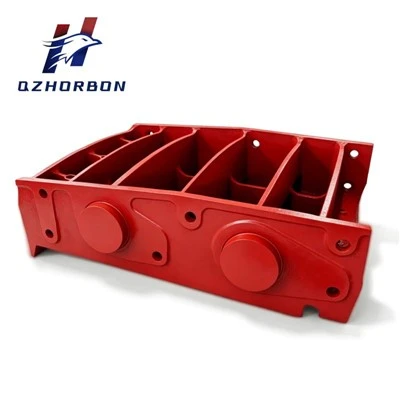
First, let’s ground this in what a crusher seal actually does, because a lot of folks I talk to skip this part. Crushers—whether jaw, cone, or impact—operate in environments where temperature swings can go from 20 degrees Fahrenheit on a winter mining shift to 180 degrees when the machine’s been running 12 hours straight. There’s silica dust, rock chips that move at 50 mph, and constant axial and radial pressure as the crusher’s shaft vibrates nonstop. The seal’s job is twofold: keep grease inside the bearing housing (so the metal parts don’t grind themselves dry) and keep contaminants outside (so abrasive rock dust doesn’t act like sandpaper inside the bearing). If the seal fails, you’re looking at a 8 to 16 hour shutdown, a $15,000+ bearing repair, and missed deliveries to your customers. So material choice isn’t a “nice-to-have”—it’s a $50,000 decision for most operations.
The first material everyone asks about is nitrile rubber, or NBR. I see this used on lighter-duty crushers—like small jaw crushers for recycling concrete or small-scale aggregate operations. Nitrile is cheap, it resists mild oil and grease, and it molds easily into standard seal shapes. But here’s the catch: I watched a quarry manager switch to nitrile seals on his primary cone crusher three years ago, and he was back at my shop six months later with a stack of failed seals. The silica dust at his site was coarser than he realized, and nitrile has a hard time resisting abrasion. It also softens at high temperatures—after 12 hours of running, the seal would deform, and dust would seep in. If you’re only running your crusher 4 hours a day, with non-abrasive material, nitrile works. But for heavy-duty mining or large aggregate crushing? Nitrile falls short.
Next up: polyurethane, or PU. This is the material I push most often for mid to heavy-duty operations, and for good reason. Polyurethane is way more abrasion-resistant than nitrile—like, 3 to 5 times more, per the lab tests I’ve run with our material suppliers. It can handle higher temperatures, up to about 200 degrees Fahrenheit, which is right in the range for most cone and impact crushers. I worked with a copper mine in Arizona last year that was going through 12 nitrile seals a month on their secondary cone crusher. We switched them to polyurethane, and they cut that number down to 1 every 6 weeks. But polyurethane isn’t perfect. It’s stiffer than rubber, so it can crack if you’re moving the crusher to a new site and the shaft shifts suddenly. It also doesn’t do well with very high temperatures—above 210 degrees, it starts to break down, and it’s not compatible with some synthetic greases that newer crushers use. So if you’re running a crusher that’s hot enough to melt asphalt, or using a non-standard grease, polyurethane might not be your top pick.
Then there’s the material that’s become the go-to for heavy-duty mining and large aggregate: polytetrafluoroethylene, or PTFE. Wait, I know what you’re thinking—PTFE is the stuff non-stick pans are made of, right? How does that work for a seal? Let me tell you, I’ve seen these seals hold up in conditions that make polyurethane fail. PTFE is almost totally inert, so it works with any grease, any contaminant, and it can handle temperatures up to 500 degrees Fahrenheit. It’s super low-friction, so it doesn’t wear out even when the crusher’s shaft is vibrating nonstop. Last year, a gold mine in Nevada was running a gyratory crusher that was exposed to extreme heat and constant abrasive rock. They’d gone through expensive polyurethane and even ceramic seals (we’ll get to those in a minute) every 4 weeks. We installed PTFE seals, and they ran them for 8 months before replacing them. That’s a huge difference. But there’s a tradeoff: PTFE is more expensive, and it’s soft. It can extrude—meaning when pressure is too high, it gets squeezed out between the shaft and the housing—if you don’t have the right design. We add a thin, reinforced stainless steel core to our PTFE seals, and that fixes that problem. But if you’re buying cheap PTFE seals without that reinforcement, they’ll fail fast.
Now, the outlier: ceramic. Some people swear by ceramic seals for the heaviest-duty applications. Ceramic is super hard, way more abrasion-resistant than any rubber or plastic material. I’ve used them on impact crushers that are crushing 12-inch basalt rock, the toughest stuff you can find. But here’s the thing: ceramic is brittle. If you drop a crusher housing during a site move, or if the shaft has a tiny misalignment, the ceramic seal can crack. I had a contractor last year who tried ceramic seals on a portable impact crusher, and he cracked 3 of them in the first month when he was moving the crusher between job sites. They worked great until he dropped it—then they were useless. So ceramic is a specialty material, not a one-size-fits-all. You only use it if you can guarantee the shaft is perfectly aligned and the crusher isn’t moving around much.
Wait, let’s talk about a hybrid that a lot of my customers don’t know about: rubber-coated metal seals. These are a metal core with a rubber (usually nitrile or EPDM) outer layer, bonded to a PTFE or polyurethane lip. I developed this hybrid seal a few years back after a customer complained that their polyurethane seals were too stiff, but their nitrile seals wore out too fast. The metal core gives you rigidity, so it doesn’t crack when the crusher shifts, and the outer lip is polyurethane, so it resists abrasion. We’ve sold these to concrete recycling operations that move their crushers every week, and they’ve cut seal failures by 70% for those customers. It’s not for everyone, but it’s a middle ground that a lot of operations miss.
So how do you pick the right one? I don’t just sell you a seal— I ask questions first, because every site is different. Let me walk you through the questions I ask every customer: What type of crusher is it? Jaw, cone, impact, gyratory? What material are you crushing? Limestone, granite, basalt, recycled concrete? What’s your average run time? 4 hours a day, 12 hours, 24/7? What’s the operating temperature of the bearing housing? Do you use standard grease or a synthetic one? How often do you move the crusher? If you can answer those, we can narrow it down.
For example: If you’re running a small jaw crusher, 4 hours a day, crushing recycled concrete, moving it once a month—nitrile is fine, and it’s cheap. If you’re running a secondary cone crusher, 12 hours a day, crushing limestone, bearing temp around 175 degrees—polyurethane is your sweet spot. If you’re running a primary gyratory crusher, 24/7, crushing granite, bearing temp over 200 degrees—PTFE with a reinforced core. If you’re running a portable impact crusher, moving it every week, crushing basalt—our hybrid rubber-coated metal seal. If you’re running a fixed impact crusher, no movement, crushing super hard rock—ceramic.
I’ve seen too many operators buy the cheapest seal they can find, or the one the salesman pushes because it’s the highest commission, and they end up paying twice as much in downtime. Last month, a new customer came to me after spending $2,000 on polyurethane seals from a big box industrial supply store. They failed in 2 weeks. I sent them our reinforced PTFE seals for $3,200, and they’re still running 3 months later. That’s the thing about crusher seals—upfront cost matters, but downtime cost matters more. A seal that costs 20% more but lasts 10 times longer is the better deal.
Another thing to watch for: seal size and design, not just material. A lot of people mix up material and design, but they go hand in hand. For example, a PTFE seal with a wrong lip design will fail, even if the material is the best. We design all our seals with a double-lip configuration—one lip for grease retention, one for contaminant exclusion. I’ve seen single-lip seals work for a little while, but they always fail when dust gets heavy. That’s why, when I talk about material, I always tie it to the design we use.
I get calls every week from managers who say, “We’ve always used polyurethane, so we’ll stick with that.” But last year, a mine in Utah called me and told me their polyurethane seals were failing every 6 weeks. I went to their site, looked at their crusher, checked the bearing temp—it was 220 degrees, 10 degrees over polyurethane’s limit. Switched them to reinforced PTFE, and they’re still at 4 months. They would have kept wasting money on polyurethane if they didn’t check the temperature. That’s why I don’t just sell seals—I advise. Because I’ve seen the failures, I’ve talked to the people who have to fix them at 2 a.m. on a Monday.
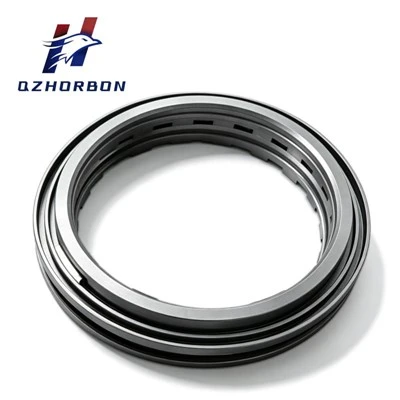
So to wrap this up: there’s no single “best” material for crusher seals. The best material is the one that fits your specific operation—your crusher type, the material you crush, your run time, your site conditions. Nitrile for light, low-abrasion work. Polyurethane for mid-duty, moderate heat. Reinforced PTFE for heavy-duty, high heat. Ceramic for fixed, super hard rock. Hybrid seals for portable, shifting equipment.
Crusher Seals If you’re tired of replacing your crusher seals every few weeks, if downtime is eating into your profits, if you’re not sure you’re using the right material for your site, reach out. I’ll ask you those questions, walk you through the options, and give you a recommendation that’s based on what I’ve seen work in the field, not just what’s cheapest for me to sell. We’ll even send you a sample seal to test on your crusher for a month—no obligation. Because the proof is in how long the seal lasts, not in a lab test or a sales pitch.
References
- Rubber Division, American Chemical Society. (2022). Abrasion Resistance of Elastomers Under Aggregate Crushing Conditions. Journal of Applied Polymer Science.
- Mining and Oil Sands Maintenance Association. (2021). Seal Material Selection for Heavy-Duty Rotating Equipment. Annual Maintenance Guidelines Report.
- Polyurethane Manufacturers Association. (2020). Performance Characteristics of Polyurethane Seals for Crusher Applications. Technical Bulletin.
- PTFE Engineering Association. (2019). Reinforced PTFE Seals for High-Temperature, High-Pressure Bearing Housings. Industry Best Practices Manual.
- Ceramic Seal Technology Association. (2022). Brittle Material Failure in Crusher Seals: Causes and Mitigation. Wear and Corrosion Journal.
Quzhou Horbon Mining Parts Co., Ltd.
Quzhou Horbon Mining Parts Co., Ltd. is one of the most professional crusher seals manufacturers and suppliers in China, featured by high quality customized service and OEM service. Please rest assured to buy premium crusher seals at competitive price from our factory. Contact us for pricelist.
Address: No.8 Nanshan Road, Qujiang District, Quzhou City, Zhejiang Province, China
E-mail: horbonmining@gmail.com
WebSite: https://www.horbonmachinery.com/
