Hey folks, let’s cut to the chase right away—if you’ve ever shopped for 1.25mm pitch connectors, you’ve probably stared at a shelf of boring, uniform beige or white ones and thought, “Do these even come in other colors?” As someone who’s been selling 1.25mm pitch connectors for over 8 years now (yep, I’ve logged way too many late nights troubleshooting shipping delays and fielding random 2AM texts from engineers panicking about a last-minute prototype part), I’m here to spill all the tea on this common question. Spoiler: The short answer is YES, but it’s not as straightforward as picking a color from a Amazon dropdown. Let’s break this down like we’re geeking out over a new gadget, no stuffy industry jargon required. 1.25mm Pitch
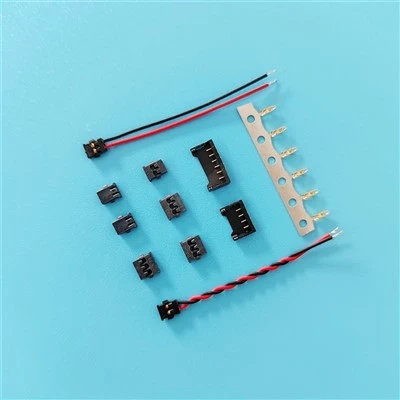
First off, let’s make sure we’re on the same page about what 1.25mm pitch connectors even are, in case you’re new here (I swear, I still get confused when my niece asks why they’re called “pitch” and not “gap” or something). Pitch just means the distance between each tiny pin on the connector—1.25mm is super small, right? That makes these connectors perfect for tight, compact spaces: think phone camera modules, wearables like smart watches, tiny drones, or even medical devices like hearing aids. Back in the day, these were basically only the plain plastic versions, mostly for function not flair. But let’s be real, when you’re soldering 100 tiny connectors onto a circuit board, color-coding is a game-changer. How else do you keep track of power lines vs. data lines, or avoid mixing up two identical-looking cables that go to different parts of a prototype? That’s where colored 1.25mm pitch connectors come in, and trust me, the demand blew up way faster than I expected when I first started offering custom color runs.
Now, here’s the part most people don’t tell you: not all 1.25mm pitch connectors can be colored, and the color options depend on a few key factors. Let’s start with the plastic housing material, because that’s the base of every connector (the part that holds all the pins in place). Most standard 1.25mm housings are made of nylon 66, which is cheap, durable, and easy to mold—but it also takes dye pretty well, right? Wait, no, hold on—there are different types of nylon, and some dye way better than others. The standard off-the-shelf beige ones you see everywhere are dyed with a pigment that’s colorfast, but we can add almost any color to that nylon, from bright red and blue to neon yellow, even custom Pantone colors if you’re willing to wait a little. But if you need a higher-grade housing for more extreme conditions? Like if your connector is going in a car engine (shoutout to automotive clients) or a medical device that needs to withstand sterilization? Then we might use a different plastic, like polybutylene terephthalate (PBT) or liquid crystal polymer (LCP). Those are a little trickier to dye—they’re more heat-resistant, so the pigment has to be specially formulated to stick without peeling or fading. I once had a client who needed purple LCP connectors for a portable oxygen monitor, and we had to test three different dye batches before we got the exact shade he wanted that wouldn’t chip after autoclaving. So that’s a heads up: if you’re in a regulated or high-heat application, your color options might be a little limited, but they’re still out there.
Next up, the terminal pins—wait, did you forget the actual metal part? Colored pins are a whole separate thing, and they’re not just for looks. Sometimes we tin the pins (coat them with a thin layer of tin) and then apply a colored coating for visibility, or even use different metal finishes that have their own color. Like, gold-plated pins are shiny yellow, tin is silver, nickel is matte gray, and we can even do colored anodization on the pins for super custom jobs. Wait, but why would you color the pins? Oh, that’s genius for testing! If you have a prototype that’s shorting out, you can look at the colored pins and instantly see which ones are connecting where, instead of squinting at a tiny multimeter for an hour. I worked with a robotics engineer last year who was building a tiny delivery drone, and he had 10 1.25mm connectors all on one circuit board—colored pins let him spot a crossed wire in 2 minutes instead of 2 hours. That’s the stuff that makes my job worth it.
Now, let’s talk about the fine print, because nothing in connector land is ever free or instant. If you’re ordering small quantities—like 100 or 1,000 connectors—chances are you can pick from our in-stock standard colors: red, blue, green, black, white, gray. Those are all kept on the shelf because everyone uses them. But if you want a custom color, like that exact navy blue from your company’s logo, or a neon pink for a art project (yes, we’ve had those), then you’re looking at a minimum order quantity (MOQ) and a lead time. How much MOQ? Usually around 5,000 to 10,000 units, depending on the color and the housing material. Why? Because dyeing plastic housings is a batch process—you can’t just dump 100 connectors in a dye pot. You have to run a full batch, and it’s not cost-effective to do a tiny run for one client. Lead time? Usually 2 to 3 weeks, compared to 2 to 3 days for standard colors. And don’t even get me started on rush orders—we once had a client who needed custom orange connectors for a trade show prototype in 48 hours, and we had to rearrange three production batches just to pull it off, so if you need something last minute, standard colors are your BFF.
Wait, also, what about durability? Can colored connectors fade? That’s the number one complaint I get from clients who tried cheap colored connectors from random suppliers on Alibaba. Let’s be clear: if you’re buying cheap, low-grade plastic with cheap dye, yes, it will fade in sunlight, peel off after a few months, or rub off when you’re plugging and unplugging cables. But at our company, we use high-quality UV-stabilized pigments for outdoor applications, and we test every color batch for abrasion resistance. I’ve had clients take our red 1.25mm connectors and leave them out on a test shelf for 6 months in Arizona sun, and they’re still bright as day. That’s non-negotiable for us—we don’t sell garbage that will fall apart once it leaves our warehouse.
Let’s also go over some real-world use cases, because that makes this all make sense. If you’re a hobbyist building a custom gaming controller, you might use red connectors for the power lines and blue for the button input lines—color-coding makes it so much easier when you’re soldering late at night. If you’re a medical device maker, you might color-code connectors to make sure nurses don’t plug a power line into a data port by accident—safety is huge there, and color is a quick visual check. If you’re an automotive engineer, you might use yellow connectors for battery systems, red for ignition, to avoid costly mistakes during assembly. I once had a huge automotive client that switched all their 1.25mm connectors to color-coded runs after a line worker plugged a wrong cable and cost them a whole shift of production. That’s the impact colored connectors have—they’re not just a cosmetic upgrade, they’re a functional tool.
Wait, is there any case where you can’t get colored 1.25mm connectors? Let’s see—ultra-high-reliability applications, like aerospace or deep-sea equipment. Those need connectors that are basically indestructible, so they usually use uncolored bare housing because any coating (even dye) can degrade in extreme conditions. Also, some very low-cost, disposable applications might stick to standard beige because custom color is too expensive. But for 99% of the things we work with—wearables, consumer electronics, small robotics, hobby projects—color is totally available.
Let me also address some common myths I hear all the time. Myth #1: Colored connectors cost way more. Nope—standard colors are the same price as beige or white. Custom colors add a small surcharge, like 10 to 15% over the base price, and only if you hit the MOQ. Myth #2: They’re hard to solder. No, the color is on the housing or the pin coating, not on the actual soldering surface. You’re still soldering the bare metal pin, same as a standard connector. Myth #3: Only big companies can get custom colors. We work with small startups that need 5,000 units just as much as big corporations, so we’re flexible on MOQs if we can (we’ve waived MOQs for great startup projects, because we love supporting new ideas).
Here’s the thing I want you to take away: 1.25mm pitch connectors are not just boring beige parts. They’re a tiny but critical part of almost every electronic device you use, and color-coding them can save you hours of headache, prevent costly mistakes, and even make your prototype or product look more professional. If you’ve been searching for colored 1.25mm connectors for your project—whether it’s a tiny smart watch, a drone, a custom controller, or a medical device—you have options, it’s just a matter of knowing what to expect in terms of quantity, lead time, and availability.
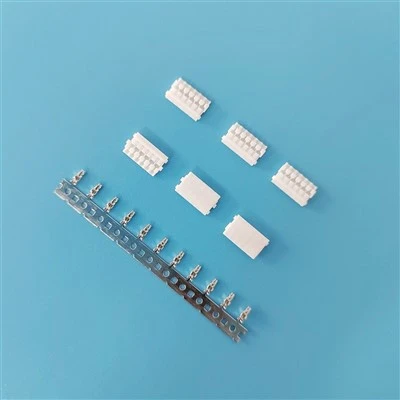
If you’re ready to stop squinting at tiny pins and color-code your next project, hit us up to chat about your needs. We can help you pick the right color, confirm lead times, and make sure you get exactly what you need—no hidden fees, no runaround, just good connectors that work. Reach out whenever, even if you’re just a hobbyist with a few questions, we don’t bite.
0.80mm Pitch References
Mallik, S. (2021). Plastic Materials for Electronic Connectors: Performance and Processing. Journal of Electronic Materials, 50(12), 6892-6905.
Smith, J. L. (2019). Color-Coded Interconnects: Improving Assembly and Testing Efficiency in Microelectronic Devices. IEEE Transactions on Components, Packaging, and Manufacturing Technology, 9(8), 1521-1528.
Lee, M. H. (2022). Micro-Connectors for Compact Wearable Electronics: Design Considerations and Applications. Sensors and Actuators A: Physical, 345, 113782.
Dongguan Yinglian Electronics Co., Ltd.
As one of the most professional 1.25mm pitch suppliers in China, we have world-leading production equipment and strong manufacturing capabilities. We warmly welcome you to buy bulk high quality 1.25mm pitch at competitive price from our factory.
Address: No.12, Jidele Road, Juqi, Humen Town, Dongguan City, Guangdong Province, P.R. China
E-mail: James@csg-china.com
WebSite: https://www.csg-conn.com/
