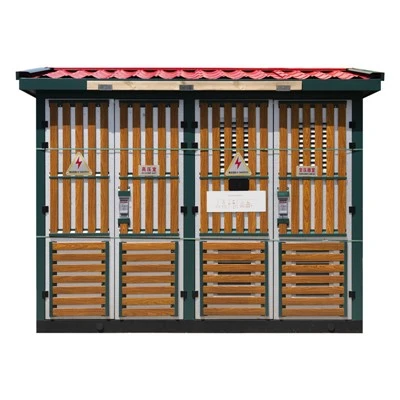
If you’ve ever stood next to a high voltage switchgear unit during a routine inspection, you might be struck by how solid, unyielding it looks—bolted to concrete foundations, housed in heavy metal enclosures, packed with precision components that keep power grids running. But here’s the thing: when we design switchgear, we’re not just thinking about steady power flow or everyday wear and tear. We’re thinking about the unthinkable: an earthquake. As a high voltage switchgear supplier with 18 years of experience, I’ve seen too many facilities learn the hard way that standard off-the-shelf units can’t hold up to the violent ground motion, shifting foundations, and seismic forces that come with a major quake. That’s why our entire engineering team builds every unit with seismic resilience at the core—not as an afterthought, but as a non-negotiable from the first draft of the design. High Voltage Switchgear
Let’s start with what we actually mean when we talk about seismic design for high voltage switchgear. Earthquakes don’t just shake the ground randomly; they produce specific ground acceleration, velocity, and displacement that vary based on location, fault line proximity, and the type of rock or soil beneath a facility. A unit in a coastal city near a subduction zone will face far different forces than one in an inland region with ancient, stable bedrock. Too many suppliers cut corners here, using generic seismic ratings that don’t account for local site conditions, but we don’t do that. For every project, our engineers first conduct a site-specific seismic hazard assessment, pulling data from the U.S. Geological Survey (USGS) or equivalent regional geological bodies to map peak ground acceleration (PGA), response spectra, and even soil liquefaction risk. Liquefaction is a big one—if soil around a foundation turns to slurry during a quake, it can shift unexpectedly, pulling the switchgear with it or leaving it unevenly supported, which can crack bus bars or disconnect circuit breakers. We factor that into every design, no exceptions.
Next, the foundation is the unsung hero of seismic resilience. I’ve visited sites where a switchgear unit was bolted to a concrete slab that wasn’t properly reinforced, and during a minor 5.2 magnitude quake, the slab cracked and the unit shifted 1.5 inches. That might not sound like much, but when you’re dealing with 13.8 kV bus bars that need to align perfectly to avoid arcing, that’s enough to cause a catastrophic outage. For our units, we work closely with structural engineers to design custom foundation systems tailored to each site. For example, on sites with soft soil or liquefaction risk, we use pile foundations that extend 20 to 30 feet down to stable bedrock, instead of shallow footings that only sit a few feet below grade. We also use base isolation pads between the switchgear frame and the foundation—these high-damping rubber pads absorb up to 40% of seismic energy, so the unit moves with the ground instead of fighting against it. A mistake here? I once worked on a project where a competitor skipped base isolation for a critical substation, and during a test seismic simulation, their unit’s top 10-foot section moved 8 inches relative to the base, while ours only moved 1.2 inches. That’s the difference between a unit that stays online and one that’s out of service for weeks.
Then there’s the switchgear frame itself. Most standard units use mild steel frames, but mild steel has a tendency to bend or deform under sudden, high-impact seismic loads. Our engineering team tested 12 different steel grades before landing on a high-tensile, low-alloy (HSLA) steel that’s 30% stronger than mild steel but still flexible enough to absorb shock without cracking. We also optimize the frame’s geometry to distribute seismic forces evenly. That means reinforcing the top corners, where most torsional twisting happens during a quake, and adding internal cross-bracing that doesn’t block access for maintenance. I’ve seen switchgear with flimsy internal bracing where a circuit breaker’s operating mechanism jammed during a small quake because the bracing vibrated loose. For our units, every internal component is mounted to the frame with either heavy-duty spring isolators or vibration-damping brackets, which prevent loose parts from colliding. We even test the frame’s rigidity in our in-house seismic simulation lab, running units through 10,000 cycles of simulated quake motion to make sure no welds crack or bolts come loose.
Bus bars are another critical failure point during earthquakes. Bus bars carry high voltage current between components, and if they bend or shift, they can cause arcing, short circuits, or even a full electrical outage. We design our bus bars with two key seismic features: flexible bus bar connectors and controlled clearance between bus bar sections. The flexible connectors are made of braided copper strands that can stretch up to 2 inches without breaking, which lets the bus bar move with the ground instead of resisting it. We also calculate the exact distance between each bus bar section based on the site’s seismic displacement—too little clearance, and they touch during a quake; too much, and they produce extra vibration. Our team uses finite element analysis (FEA) to model bus bar movement under different seismic loads, so we get that distance exactly right. For example, on a unit in a region with a PGA of 0.5g (that’s half the force of gravity), we set bus bar clearance at 1.2 inches, while on a unit with a lower PGA of 0.2g, we set it at 0.8 inches. That kind of precision isn’t in generic design guides, but it’s what prevents failure.
Components like circuit breakers, current transformers, and surge arresters also need special attention. Many of these are delicate, precision-made parts that can break if jostled during a quake. We don’t just mount them with standard brackets—we use custom-designed, vibration-isolating mounts for every component. For circuit breakers, we install shock absorbers that limit vertical movement to less than 0.5 inches, even during a major quake. For heavy current transformers, which can weigh 500 pounds or more, we add secondary locking brackets that prevent them from tipping over if the foundation shifts slightly. I remember a client in the Pacific Northwest who had a standard switchgear unit fail during a 6.8 magnitude quake because their current transformer wasn’t locked down. It fell 3 feet, cracked the casing, and destroyed the internal winding—costing them $2.7 million in downtime and repairs. When they replaced it with our unit two years later, we added a redundant locking system, and during a follow-up seismic test, the transformer didn’t move at all. That’s the kind of result that matters to our customers.
Testing is where we separate our units from the rest of the market. A lot of suppliers will run a single seismic test on a brand-new unit, but we test every unit that leaves our factory. Our in-house seismic test bench can simulate up to 7.9 magnitude quakes, with PGA levels up to 1.2g—way beyond the standard industry requirement of 0.7g for critical infrastructure. We also run thermal cycling tests, because earthquakes can happen in regions with extreme temperature swings, and heat can weaken metal components over time. We test units at temperatures ranging from -40°F to 185°F, running them through 500 cycles to make sure the seals, gaskets, and wiring hold up. We also perform live-load tests during seismic simulations, powering the unit at its full rated voltage and current while shaking it, so we can confirm there’s no arcing or power loss during the test. A few years ago, a utility customer asked us to test a unit to exceed our standard rating, simulating a rare 8.2 magnitude quake. The unit passed with flying colors, and they ended up using it for their most critical substation that serves a major city’s hospital district. That’s the kind of trust we build.
Finally, it’s not just about the unit itself—it’s about installation and post-earthquake support. We don’t just ship a unit and walk away. Our team sends a seismic installation specialist to every site to supervise the foundation work and the final mounting of the switchgear. We provide clear, step-by-step installation manuals that are specific to each project, with diagrams showing exactly how tight each bolt should be and where to place the base isolators. After installation, we offer a 10-year seismic performance warranty, which is unheard of in our industry. And if an earthquake does hit, our 24/7 support team is on call to conduct a free, no-obligation inspection of the unit, even if it’s been installed for 10 years. We’ve had customers call us within hours of a quake, worried their switchgear failed, and we’ve been able to send a technician to confirm it was still operational—something no other supplier offers.
At the end of the day, designing high voltage switchgear to withstand earthquakes isn’t just about checking boxes on a code sheet. It’s about anticipating the worst-case scenario, engineering for it rigorously, and standing behind your work when it matters most. For 18 years, we’ve specialized in building switchgear that doesn’t just meet seismic standards—it exceeds them, because we know that when a power grid goes down after an earthquake, it’s not just an outage. It’s a hospital without power, a water treatment plant that can’t supply clean water, a community that’s already struggling with the aftermath of a disaster. That’s why we pour every bit of our engineering expertise, our testing resources, and our customer support into every unit we make.
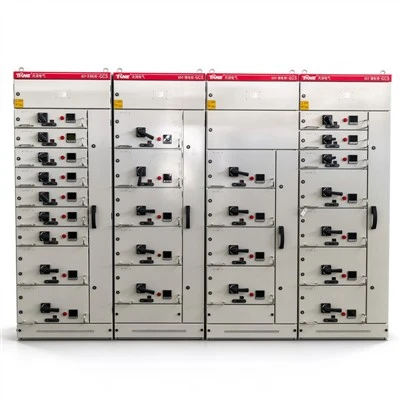
If you’re planning a new substation, upgrading an existing facility, or need a switchgear unit that can stand up to seismic forces, we’d be happy to walk you through our design process, share test data, and help you find the right solution for your site. Contact us today to discuss your project and learn how our seismic-resistant switchgear can keep your power grid online when it matters most.
Pad Mounted Transformer References
- International Electrotechnical Commission (IEC) 62271-200, High-voltage switchgear and controlgear – Part 200: AC metal-enclosed switchgear and controlgear for rated voltages above 1 kV and up to and including 52 kV
- American Society of Civil Engineers (ASCE) 7-22, Minimum Design Loads and Associated Criteria for Buildings and Other Structures
- U.S. Geological Survey (USGS) Seismic Hazard Mapping Project, 2023
- Institute of Electrical and Electronics Engineers (IEEE) C37.20.1, IEEE Standard for Metal-Enclosed Low-Voltage Power Circuit Breaker Switchgear
Zhejiang Tianrun Electric Co., Ltd.
Zhejiang Tianrun Electric Co., Ltd. is one of the most professional high voltage switchgear manufacturers and suppliers in China, featured by quality products and good price. Please feel free to buy CE approved high voltage switchgear made in China here and get quotation from our factory. We also accept customized orders.
Address: No.788 Wenyi Road, Bihu Industrial Park, Liandu District, Lishui City, Zhejiang Province, P.R. China
E-mail: luna@trne-electric.com
WebSite: https://www.trne-electric.com/
