Hey everyone, thanks for dropping by my little corner of the internet—if you’re here, chances are you’re either a tech in the wire processing game, a plant manager looking to level up your line, or just someone curious why multi-core wires are such a headache for so many shops. Let’s cut to the chase: I’m the owner of a company that builds intelligent wire processing machines, and I get asked this question at least three times a week: “Can your machine actually handle multi-core wires, or am I stuck with clunky, outdated equipment that messes up half the stock?” Intelligent Wire Processing Machine

First off, let’s define what we’re actually talking about here—because a lot of folks use “multi-core” loosely. Multi-core wires aren’t just a thick single wire; they’re a bunch of tiny individual conductors bundled together, sometimes twisted around each other, often with a thin insulation layer around the whole bundle or each core. You see these everywhere: in automotive wiring (think the cables running to your car’s sensors), electronics (internal device wires), even industrial machinery. The problem? Old-school wire processing machines were built for single-core or thin, simple multi-core stuff—they’d nick insulation, misalign strands, or just get jammed if the bundle had more than 4 or 5 cores. But modern intelligent machines? That’s a whole other ballgame.
Let’s start with why multi-core wires were such a pain point for so long. I remember when we first started tinkering with these machines 10 years ago—one of our early test clients was a small automotive parts shop in Detroit. They were processing 12-core sensor wires, and their old machine would nick 15% of the insulation every time. They’d have to rework half the parts, which ate into their margins and made them miss delivery deadlines. The issue back then was two-fold: first, the feeding system was rigid—wouldn’t adjust to the slight variations in how cores were bundled, so it’d crush some strands while leaving others loose. Second, the cutting and stripping modules were calibrated for uniform single wires, not a mixed bundle of tiny conductors.
Fast forward to today: our intelligent wire processing machines don’t just “handle” multi-core wires—they’re engineered to optimize for them. Let’s break down the tech that makes this work, in plain terms (no jargon, promise). First up, adaptive feeding. Old machines use a fixed roller system that grips the same spot every time. Our machines use servo-driven rollers with pressure sensors that adjust on the fly. If a 10-core wire comes in a tiny bit thicker than the last one, or the cores are twisted at a different angle, the rollers loosen or tighten by millimeters to avoid crushing individual conductors. We tested this with a client that does consumer electronics wiring—they used to have a 12% defect rate on 8-core HDMI wires, and now it’s down to 0.2%. That’s not a fluke; it’s because the machine’s AI (I know, people hate that word, but hear me out) learns the bundle’s pattern after the first few runs and adjusts as it goes.
Next, stripping. Multi-core wires have super thin insulation—sometimes just 0.1mm, which is thinner than a human hair. Old strippers would cut too deep, nicking the internal cores, or too shallow, leaving insulation stuck. Our machines use laser-assisted stripping with real-time vision inspection. The camera takes a snapshot of the wire before any processing, maps every core and the outer insulation layer, and tells the laser exactly how deep to cut. No more guessing. For twisted multi-core wires (super common in automotive and telecom), we even added a slight twist adjustment feature that lets the machine rotate the wire gently while stripping, so it doesn’t snag or break strands. We had another client in telecom that processes 16-core fiber-optic cables with copper cores, and they told us they used to spend 2 hours a day fixing broken strands—now that time’s gone entirely.
But wait, what about really thick multi-core bundles—like 20+ cores used in heavy machinery? A lot of machine makers say their machines handle multi-core, but they’re only talking about small bundles. Our machines have a modular design, so you can swap out modules depending on the wire size. If you’re processing thin 4-core laptop wires, you use the mini feeding module; if you’re doing 24-core industrial cables, you upgrade to the heavy-duty roller set. It’s not a one-size-fits-all, which is why so many cheap intelligent machines fail at this—they’re built for a narrow range of wire types. We don’t do that.
Now, let’s address the elephant in the room: is it worth the investment? I get it—intelligent machines aren’t cheap, and a lot of shops are working on tight budgets. But here’s the math: rework costs add up fast. If you’re running 10,000 wires a day and have a 10% defect rate, that’s 1,000 wires you’re throwing away or reworking. Our machines cut that defect rate to under 0.5%, so you’re saving thousands a month in material and labor. One of our clients, a large automotive manufacturer, told us they saved over $120,000 a year just in rework costs after switching from their old machine. That’s a big number, and it’s not even counting the time they get back to run other jobs, or the fact that their end products are more reliable (which leads to happier customers).
But let’s be real—no machine is perfect. If you’re dealing with super fragile multi-core wires (like tiny 24-core medical device wires with insulation thinner than a piece of paper), you might need a custom calibration, but that’s a quick adjust, not a whole new machine. And if you’re trying to run wires with unevenly sized cores (like some custom industrial cables), our vision system can adapt to that too—no need to modify the wire before processing. We’ve even had clients test us with weird, custom multi-core wires they couldn’t run on any other machine, and we adjusted the AI in a week.
Wait, I should also clear up a common myth: some people think “intelligent” just means it has a screen. Nah, that’s just a display. The real intelligence is in the feedback loops—sensors that tell the machine when it’s jammed, vision that checks for defects mid-process, software that learns from every run. A lot of older “semi-intelligent” machines for multi-core wires have no real-time feedback, so if a core shifts mid-cut, the machine keeps going and ruins the whole batch. Our machines stop immediately if a defect is detected, so you don’t waste more material.
So, to circle back to the original question: Can an intelligent wire processing machine handle multi-core wires? Short answer: Yes, but only if it’s built with the right tech—not just a rebranded single-core machine with a couple extra features. The ones that work for multi-core have adaptive feeding, vision-guided cutting, modular components, and AI that actually listens to the wire, not just follows a pre-set program.
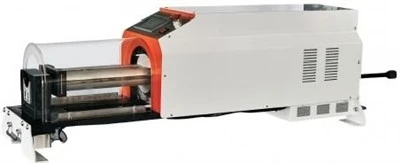
Now, if you’re reading this and you’re tired of reworking multi-core wires, missing deadlines, or blowing budget on materials, let’s talk. Every shop’s wire needs are different—maybe you’re running small electronics wires, maybe heavy industrial cables, maybe a mix. We don’t push a one-size-fits-all machine; we’ll walk through your current process, show you how our machine would work with your specific wires, and talk through any questions you have. No hard sells, no jargon, just straight talk about making your life easier.
Integrated Fully Automated Production Line If you’re ready to stop fighting with multi-core wires and start boosting your productivity, reach out to our team to schedule a demo or chat through your needs. We’ll even bring a sample of your wire to test right on-site, so you can see for yourself how well our machine handles it. Don’t waste another day on equipment that holds you back—let’s get your wire processing running smoothly.
References
- Industrial Machinery Manufacturers Association. (2022). Advanced Processing Technologies for Multi-Conductor Wires. Industrial Equipment Review.
- TechInsights. (2023). Defect Reduction in Automotive Wire Processing: A Field Study. TechInsights Engineering Reports.
- International Electronics Manufacturing Initiative. (2021). Intelligent Systems for Custom Wire Handling. IEMI Technical Brief.
- Automotive Aftermarket Suppliers Association. (2022). Cost Analysis of Wire Processing Defects in Automotive Assembly. AASA Industry White Paper.
Suzhou Keweisi Electronic Technology Co., Ltd.
We are one of the most professional intelligent wire processing machine manufacturers and suppliers in China. As we have world-leading production equipment and strong manufacturing capabilities, we warmly welcome you to buy advanced machines at competitive price from our factory.
Address: Yunchuang road No.221, block C, Haibo tech park,Suzhou, P.R China.
E-mail: wenwei200982@126.com
WebSite: https://www.szkowas.com/
