As a centrifugal fan supplier deeply involved in the industry, the efficiency of a centrifugal fan is a topic that I’m extremely passionate about. Understanding the nuances of a centrifugal fan’s efficiency is crucial not only for us as suppliers but also for our customers who rely on these devices for various industrial and commercial applications. Centrifugal Fan

What is Centrifugal Fan Efficiency?
Centrifugal fans work by converting mechanical energy from a motor into kinetic energy in the air. This is achieved as the impeller rotates, drawing air in axially and expelling it radially. The efficiency of a centrifugal fan refers to the ratio of the useful work done by the fan (in terms of moving air and providing pressure) to the mechanical power input from the motor.
In simple terms, a highly efficient centrifugal fan can move a large volume of air at the desired pressure using less electrical power. This is significant as it directly translates into cost savings for the end – users. For example, in ventilation systems for large commercial buildings, energy costs can be a substantial part of the operating budget. A more efficient centrifugal fan can reduce these energy costs significantly over time.
Factors Affecting Centrifugal Fan Efficiency
There are several key factors that influence the efficiency of a centrifugal fan:
Design of the Impeller
The impeller is the heart of the centrifugal fan. Its design, including the number of blades, blade shape, and blade angle, plays a vital role in determining the fan’s efficiency. Forward – curved blades, for instance, can generate high air volume at relatively low pressures. However, they may not be as efficient as backward – curved blades, which are better suited for high – pressure applications and generally offer higher efficiency.
Backward – curved blades are designed in such a way that they minimize the amount of energy lost due to turbulence. As the air moves over these blades, it experiences less resistance, allowing the fan to convert more of the input power into useful work. A well – designed impeller can also reduce noise levels, which is an added benefit in many applications.
Fan Size and Speed
The size of the fan and its operating speed are also important factors. Larger fans generally have higher efficiencies because they can move more air per revolution. However, the size must be carefully matched to the application requirements. An oversized fan will operate at a lower efficiency point because it will be moving air at a rate that is higher than needed, wasting energy.
Similarly, the speed at which the fan operates affects its efficiency. Fan laws state that the power consumption of a fan is proportional to the cube of its speed. Therefore, running a fan at a lower speed can result in significant energy savings. Variable frequency drives (VFDs) can be used to control the speed of the fan according to the actual demand, ensuring that the fan operates at its most efficient point.
System Resistance
The resistance of the ductwork and other components in the system has a direct impact on the fan’s efficiency. High system resistance can cause the fan to work harder to move the required amount of air, resulting in increased power consumption and reduced efficiency. It is essential to design and install the ductwork properly, minimizing bends, obstructions, and other sources of resistance. Additionally, regular maintenance of the system, such as cleaning filters and inspecting ducts for leaks, can help maintain optimal system resistance and fan efficiency.
Air Density
Air density, which is affected by factors such as temperature, altitude, and humidity, can also influence fan efficiency. As air density decreases (e.g., at higher altitudes or in warmer temperatures), the mass of air being moved by the fan also decreases. This means that the fan may need to operate at a higher speed to maintain the same volume of air flow, which can increase power consumption and reduce efficiency.
Measuring Centrifugal Fan Efficiency
There are several ways to measure the efficiency of a centrifugal fan. One common method is to calculate the total efficiency, which is the ratio of the total power output (in terms of air power) to the total power input (from the motor). Air power is calculated based on the volume of air flow, the pressure increase across the fan, and the density of the air.
Another important measure is the static efficiency, which focuses on the ability of the fan to overcome static pressure in the system. This is particularly relevant in applications where the main goal is to provide air circulation against a resistance, such as in heating, ventilation, and air – conditioning (HVAC) systems.
In addition to these calculations, performance testing in a laboratory setting can provide more accurate data on a fan’s efficiency. Standardized testing procedures, such as those defined by organizations like the Air Movement and Control Association (AMCA), ensure that the results are comparable across different fan models and manufacturers.
Importance of Efficiency in Different Applications
The importance of centrifugal fan efficiency varies depending on the application:
Industrial Ventilation
In industrial settings, centrifugal fans are used for ventilation, dust collection, and conveying materials. These applications often require large – scale equipment that runs continuously, consuming significant amounts of energy. A highly efficient fan can result in substantial cost savings and reduced environmental impact. For example, in a manufacturing plant, an efficient dust collection system not only helps in maintaining a clean and safe working environment but also reduces the overall energy consumption of the facility.
HVAC Systems
In commercial and residential HVAC systems, centrifugal fans play a crucial role in providing fresh air, heating, and cooling. As energy costs continue to rise, the efficiency of these fans becomes even more important. An efficient fan can help lower the energy bills of building owners and occupants while maintaining a comfortable indoor environment. Additionally, in green building projects, high – efficiency fans are often a requirement to meet energy – efficiency standards.
Power Generation
In power plants, centrifugal fans are used for boiler ventilation, flue gas handling, and air pre – heating. These fans typically operate at high loads and for extended periods. Improving their efficiency can lead to significant savings in fuel consumption and reduced emissions. For example, in a coal – fired power plant, an efficient air pre – heater fan can help increase the combustion efficiency of the boiler, reducing the amount of coal needed to generate the same amount of electricity.
Our Commitment as a Centrifugal Fan Supplier
As a centrifugal fan supplier, we understand the importance of efficiency in all aspects of our business. We are committed to providing our customers with high – efficiency centrifugal fans that are designed to meet their specific needs.
Our research and development team is constantly working to improve the design of our fans, incorporating the latest technologies and materials to enhance efficiency. We use advanced computer modeling and simulation techniques to optimize the impeller design, ensuring that our fans operate at the highest possible efficiency levels.
In addition to our product development efforts, we also offer comprehensive consulting and support services to our customers. We can help them select the right fan for their application, taking into account factors such as system resistance, air volume requirements, and energy efficiency goals. Our engineers can also assist in the installation and commissioning of our fans, as well as provide maintenance and troubleshooting advice to ensure long – term reliable operation.
Conclusion
In conclusion, the efficiency of a centrifugal fan is a critical factor that affects both the performance and cost – effectiveness of various industrial and commercial applications. By understanding the factors that influence fan efficiency, such as impeller design, fan size and speed, system resistance, and air density, users can make informed decisions when selecting a centrifugal fan.
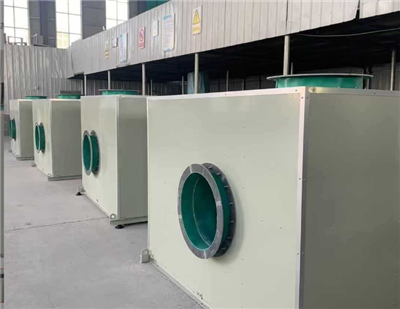
As a supplier, we are dedicated to providing high – efficiency solutions that meet the diverse needs of our customers. Whether you are looking for a fan for a small – scale ventilation system or a large – scale industrial application, we have the expertise and products to help you achieve your goals.
Corrosion-resistant Fan If you are interested in learning more about our centrifugal fans or would like to discuss your specific requirements, we encourage you to contact us for a consultation. Our team of experts is ready to assist you in finding the most efficient and cost – effective solution for your project.
References
- “Centrifugal Fans: Principles and Practices” by A. S. Kutz
- Air Movement and Control Association (AMCA) Standards for Fan Performance Testing
Nantong Nanyang Fan Manufacturing Co., Ltd.
As one of the leading centrifugal fan manufacturers and suppliers in China, we also support customized service with low price. Please feel free to buy discount centrifugal fan made in China here from our factory. For quotation, contact us now.
Address: North End of Jiuwei Port Bridge, Nantong City, Jiangsu Province
E-mail: nyfji@126.com
WebSite: https://www.nanyangfan.com/
