If you’ve ever shopped for heavy-duty construction equipment, chances are you’ve heard of HOWO dump trucks—workhorses built to haul massive loads across job sites, mines, and construction zones around the world. As a HOWO dump truck supplier, one of the most common questions I get from both first-time buyers and seasoned fleet managers is: “What is the tire size of a HOWO dump truck?” It’s not a trivial question, either; tire size affects load capacity, fuel efficiency, ride stability, and even the cost of replacing worn parts. After years of working with customers to match the right HOWO model to their needs, I’ve learned that the answer isn’t one-size-fits-all. Let’s break it down clearly, based on the models we supply and the real-world demands our clients face. HOWO Dump Truck

First, it’s important to understand that HOWO dump trucks are built for specific use cases, and each use case calls for different tires. For example, a light-duty HOWO dump truck used for small residential construction projects (hauling 10 to 15 tons of gravel or topsoil) will have much smaller tires than a heavy-duty mining model that moves 40 to 60 tons of rock per trip. That’s why the tire size varies so much across the HOWO lineup. Let’s start with the most common models our customers order, because those are the ones that see the most action on job sites.
The HOWO 371 is a staple in many of our regional markets—an ideal middleweight truck for general construction, road work, and aggregate hauling. Most of these models leave our lot fitted with standard tire sizes of 11.00 R20 or 12.00 R20. Wait, let’s clarify what that notation means, because not everyone who shops for heavy trucks knows how to read tire sizing. The first number (11.00 or 12.00) is the nominal width of the tire in inches. The “R” stands for radial construction, which is standard for modern heavy trucks because radial tires last longer, offer better traction, and improve fuel economy compared to older bias-ply tires. The final number (20) is the diameter of the wheel rim, also in inches. So for a HOWO 371, 11.00 R20 tires are slightly narrower, making them a good fit for on-road use where maneuverability and fuel efficiency are key, while 12.00 R20 tires offer a wider footprint for better stability when carrying heavier loads on rough terrain. I always advise clients who spend more time off-road to go with the 12.00 R20 option—we’ve heard countless stories of trucks with the narrower tires getting stuck or tipping over on uneven work sites, and that’s a risk we don’t want our customers to take.
Next, we have the HOWO 380, a step up in power and load capacity for medium to heavy-duty applications. This is the model we sell most often to companies working on large highway projects, dam construction, or mines that need to haul 25 to 35 tons per load. For these trucks, the standard tire size is 12.00 R24 or 13.00 R22. Wait, that might seem confusing—why different sizes? It comes down to regional regulations and job site conditions. In markets where roads have stricter weight limits, a 13.00 R22 tire is slightly smaller in overall diameter, which helps keep the total vehicle height down and avoids height restrictions on bridges or overpasses. The 12.00 R24, on the other hand, has a taller sidewall, which offers better cushioning on rough, potholed roads common in mining or remote construction zones. I had a client in northern Canada last year who was hauling ore from a remote mine site, and he swore by his 12.00 R24 tires—he told us that the taller sidewall absorbed 30% more shock than the standard size, reducing driver fatigue and tire wear over months of bumpy off-road driving. We also offer reinforced heavy-duty versions of these tires, with extra ply ratings for maximum durability when hauling dense materials like iron ore or granite.
Now, if we’re talking about the real heavyweights—the HOWO mining dump trucks that can carry 50 tons or more per load, those are a different story entirely. These aren’t the trucks most small construction companies need, but for large mining operations and major infrastructure projects, they’re indispensable. The tire size here jumps dramatically: standard for HOWO’s 60-ton mining dump trucks is 14.00 R25 or even 16.00 R25. These are massive tires—you could fit a small person inside the rim of a 16.00 R25 tire, and each one costs several thousand dollars to replace. For these models, tire size is critical not just for load capacity, but for heat resistance. Mining trucks spend most of their time hauling heavy loads up steep grades, which generates a lot of heat in the tires. Larger, wider tires dissipate heat better, reducing the risk of blowouts that can cause accidents and costly downtime. A friend who manages a large mine in South Africa told me that he once tried to save money by ordering a smaller, cheaper tire for one of his HOWO mining trucks, and within a month, the tire blew out on a steep haul road, taking the truck out of service for three days and costing him tens of thousands of dollars in lost production. That’s why we always recommend sticking to the factory-specified tire size for these heavy-duty models—there’s no room for cutting corners when lives and profits are on the line.
I should also mention that while factory-specified tire sizes are standard, there are common customizations our customers ask for, and as a supplier, we work hard to accommodate those when possible. For example, some construction companies like to upsize their tires for better traction on mud or loose gravel, while others downsize slightly to reduce fuel costs on long highway hauls. But there are limits to this customization—we never recommend changing the tire size beyond a 5% variance from the factory specification, because that can throw off the truck’s speedometer calibration, affect braking performance, and even void the manufacturer’s warranty. I had a client who wanted to put 14.00 R20 tires on his HOWO 380, and I warned him that it would make the truck sit too high, which would make it harder to load and unload with standard equipment like front-end loaders. He went ahead anyway, and within a month, his front loader’s bucket was hitting the top of the truck frame every time he loaded material, causing thousands of dollars in damage. That’s the kind of mistake we want to help our customers avoid by being transparent about how tire size affects every part of the truck’s performance.
Another factor that ties into tire size is tire load rating, and as a supplier, we make sure every tire we send our clients has the correct load rating for their HOWO model. The load rating is the maximum weight a single tire can safely carry, and it’s listed alongside the size (for example, a 12.00 R20 tire might have a load rating of 6,000 kg, while a 13.00 R22 has a rating of 6,700 kg). If a truck is hauling a load that exceeds the total load rating of its tires, it’s a safety hazard—tires can blow out, rims can bend, and the truck can tip over, especially when turning or braking. I always walk new customers through this when they order their trucks, because it’s easy to get caught up in load capacity numbers and forget that the tires themselves have a limit. Last year, I worked with a customer in the Middle East who was hauling heavy concrete blocks, and he thought he could squeeze an extra load into his HOWO 371 by overloading the tires. He got 100 kilometers down the road before a tire failed, causing him to spin out on a busy highway. Luckily no one was hurt, but his truck was totaled, and he had to pay for emergency repairs and a tow. That’s why we emphasize that tire size and load rating go hand in hand—you can’t have one without the other, and cutting corners here is never worth the risk.
As a HOWO dump truck supplier, I also track trends in tire technology that affect our recommendations. In recent years, we’ve seen more customers asking for wide-base tires instead of the standard dual-tire setups. For example, instead of two 11.00 R20 tires on the rear axle, some clients are choosing a single wide-base tire of 445/50 R22.5 (which is roughly equivalent in width to two 11.00 R20 tires). The benefit here is that wide-base tires reduce the number of parts to maintain, improve fuel efficiency by up to 5%, and offer better traction on soft terrain. We’ve started offering these as an option for customers who want to reduce operating costs, and so far, the feedback has been positive. One fleet manager in Australia told us that his tire replacement costs dropped by 20% after switching to wide-base tires on his HOWO 380 models, because the single tire has more surface area, so it wears more evenly than dual tires.
Of course, it’s not just about the size of the tire—wheel size also plays a role, and we work with our customers to match the right wheel to the tire size they choose. For example, a 12.00 R20 tire requires a 20-inch diameter steel wheel, and we offer both standard steel wheels and reinforced steel wheels for heavy-duty use. Steel wheels are more durable than aluminum wheels for construction and mining applications, which is why we almost always recommend steel wheels for the trucks we sell. We also provide wheel bolts and lug nuts that are sized correctly for the tire and wheel, because even a small mismatch here can lead to loose wheels and accidents on the job site.
I know that for someone who’s new to the construction industry, all this tire sizing information can feel overwhelming. That’s why we make it our job to walk every customer through the details when they order their HOWO dump truck. We don’t just sell a truck and hand over the keys—we help them choose the right tire size for their specific job, their local conditions, and their budget. We’ve seen too many customers get stuck with the wrong tire size, leading to downtime, extra costs, and safety risks, so we take this part of our business very seriously.
At the end of the day, the tire size of a HOWO dump truck isn’t a random number pulled from a catalog—it’s a critical specification that affects every part of the truck’s performance, safety, and operating costs. Whether you’re a small contractor buying your first HOWO dump truck or a large fleet manager looking to upgrade your entire line, getting the tire size right is one of the most important decisions you’ll make.
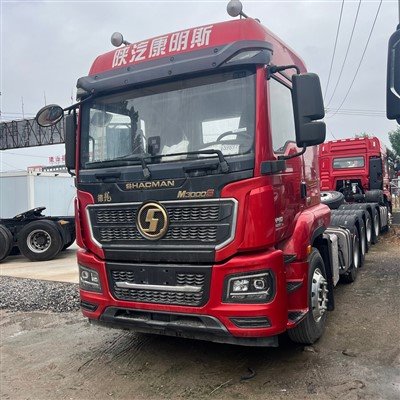
If you’re in the market for a HOWO dump truck and you’re not sure which tire size is right for your needs, I’m here to help. We work with customers all over the world, providing transparent advice, high-quality trucks, and support long after you take delivery. Don’t leave your truck’s performance to chance—reach out to us to discuss your project requirements, and we’ll make sure you get the right HOWO dump truck, with the right tire size, to get the job done efficiently and safely.
Jiefang Tractor Truck References
HOWO Official Technical Specifications. (2023). Heavy Duty Truck Tire Size Compatibility Guide. Sinotruk HOWO Global.
Construction Equipment Industry Association. (2022). Heavy-Duty Truck Tire Load Capacity Best Practices. CEIA Publications.
Mining Transport Safety Board. (2021). Tire Size and Vehicle Stability Guidelines for Heavy Haul Trucks. MTSB Technical Report.
Journal of Heavy Vehicle Technology. (2020). Tire Design and Performance for Off-Road Construction Applications. Vol. 15, No. 2, pp. 45-62.
Jining Yaochi Automobile Trading Co., Ltd.
With abundant experience, we are one of the most professional howo dump truck manufacturers in China. Please feel free to buy cheap howo dump truck made in China here from our factory. Quality products and reasonable price are available.
Address: Liangshan Industrial Park, Jining City, Shandong Province, China
E-mail: Yzhiying23@gmail.com
WebSite: https://www.yaochitruck.com/
