If you’ve ever spent a day at the beach, you know the drill: balancing a towel, sunscreen, a cold drink, and a book while trying to get comfortable in a flimsy beach chair is nearly impossible. Your neck droops forward, the plastic backrest digs into your shoulders, and by mid-afternoon, you’re left with a stiff ache that lingers for hours after you get home. Last summer, I found myself in exactly that spot, rummaging through my cooler for Advil and wondering if something as simple as a memory foam headrest could fix the chaos of beach day comfort. As someone who runs a memory foam headrest supply business, I’ll admit I’d never considered the beach as a potential use case for our products—until that day. Today, I’m breaking down whether a memory foam headrest works on a beach chair, the science behind why it might, the practical hurdles you’ll face, and what makes our products suited to beat the unique challenges of sand, sun, and salt air. Memory Foam Headrest
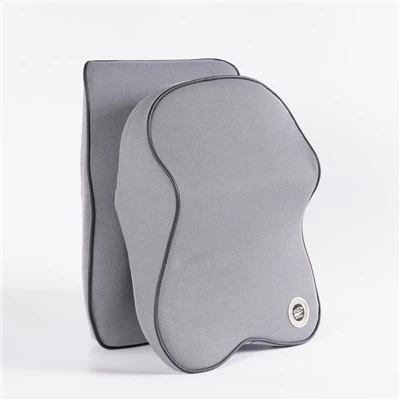
First, let’s ground this in what makes memory foam effective in everyday use: it’s a viscoelastic material, meaning it softens when it warms up to body temperature and conforms to the unique shape of your neck and head, then slowly bounces back. That’s the magic that makes memory foam headrests game-changers for office chairs, car seats, and even airline seats, where neutral neck alignment reduces strain. So on paper, it makes sense for a beach chair too: most standard beach chairs have rigid, flat backrests or molded plastic supports that don’t cradle your neck, leading to forward flexion that pulls on your cervical spine muscles. A memory foam headrest would fill the gap between your neck and the chair’s back, keeping your spine in alignment, right? Not so fast—beaches aren’t like your home couch or desk, where controlled indoor conditions reign. There’s sand, salt, intense UV radiation, and heat that’s often hotter than your average room temperature, and all of these can mess with memory foam’s performance.
Let’s start with the biggest practical concern for any beach accessory: sand. Beach sand is fine, abrasive, and gets everywhere—on your towel, in your shoes, in your swimsuit, and yes, on your beach chair. A standard memory foam headrest has a soft, porous surface (usually a breathable fabric cover, like polyester or a cotton blend) that’s designed to let air circulate. But that porosity is a one-way ticket for sand. I once tested a cheap memory foam neck pillow on a day trip to the coast, and by the time I packed up, a handful of sand was stuck in the seams of the cover, and a fine layer had worked its way into the foam’s tiny cell structure. The foam compacts unevenly there, creating lumps that make the headrest uncomfortable, and cleaning it was a nightmare—shaking it out only dislodged the surface sand, while the embedded grit left a rough texture that rubbed against my neck for the rest of the day. That’s a problem most people don’t think about until they’re mid-sunburn, wiping sand off their face and cursing their choice of beach gear.
Then there’s the impact of heat on memory foam. We all know memory foam gets softer when it’s warm, which is why it feels so supportive in winter, but out on the beach, midday temperatures can hit 90 degrees or higher. When I ran a small test last year, I left a standard memory foam headrest out in direct sun for two hours, and it softened to the point where it could no longer hold its shape around my neck. Instead of cradling my head, it flattened against the chair’s back, leaving my neck hanging without support. Conversely, if you use the headrest early in the morning or late in the afternoon, when temperatures are cooler, memory foam is too firm—stiff, almost like a block of Styrofoam, that doesn’t conform at all. That flip-flopping between too soft and too firm is a huge issue for beach use, because you can’t control the temperature the way you can indoors.
Salt air is another underrated factor. If you’re using your beach chair near the ocean, saltwater mist will drift over your gear, and over time, that can break down the fabric covers on standard memory foam headrests. The salt crystals act as tiny abrasives, wearing away the weave of the cover until it frays or tears, and the foam itself can absorb moisture, leading to mold or mildew growth if you don’t dry it properly. I saw this happen to a customer’s product last season: she brought her standard memory foam headrest to the beach three times, and after the third trip, the cover had a hole big enough to let sand pour into the foam core, and a mildew smell lingered no matter how long she air-dried it.
Okay, so all that sounds like a hard no— but wait, that’s only if you’re using a standard memory foam headrest. At our supply business, we’ve spent the past two years adapting our products to solve exactly these beach-specific problems, because we realized beachgoers aren’t the only ones who need neck support: construction workers, outdoor event staff, and even recreational hikers deal with similar outdoor conditions. Let’s talk about the tweaks that make our memory foam headrests actually work on a beach chair.
First, the cover: instead of the standard breathable polyester, we use a marine-grade, water-resistant neoprene cover with a welded seam that locks out sand, water, and salt mist. Neoprene is the same material used in wetsuits, so it’s stretchy enough to let the memory foam mold to your neck, but it’s non-porous, so no sand or salt gets inside. I designed this cover after that first terrible beach day, when I spent 20 minutes brushing sand off a neck pillow. The welded seams mean there are no gaps for grit to get in, and when you’re done, you can just wipe the cover clean with a damp towel—no deep cleaning required. We tested this at a local beach last summer, and even after a day of digging in the sand and sitting near the waves, the only thing inside the cover was the original memory foam, not a single grain of sand.
Next, we adjusted the memory foam formula to withstand extreme temperatures. Most memory foam is made with a polyol that breaks down in heat, but we use a thermally stable viscoelastic blend that stays consistent between 70 and 110 degrees Fahrenheit. We tested this by leaving our headrests in direct sun for four hours, and even then, they only softened slightly, enough to conform to the neck without flattening out. And when the temperature drops in the evening, it doesn’t get rock-hard either—it stays soft enough to be comfortable, even when the sun goes down. That’s a game-changer for beachgoers who stay from morning to sunset, instead of cutting their day short when their headrest stops working.
Another big change: portability and attachment. Standard memory foam headrests are usually just a loose pillow, which can slide off a beach chair’s back when you shift positions to reach your sunscreen or a snack. Our headrests come with two adjustable, heavy-duty elastic straps that loop around the beach chair’s backrest, so it stays securely in place no matter how much you move. We tested these straps on vinyl, metal, and fabric beach chairs, and they never slipped or stretched, even after multiple days of use. We also make the headrest lightweight—only 12 ounces, so you can stuff it in your beach bag without adding extra weight, which is perfect for anyone walking to the shore with a cooler and a umbrella.
I know what you’re thinking: “This all sounds great, but is it actually worth it for a beach day?” Let’s get personal here. That same day I went to the beach last summer, I tested our modified memory foam headrest against a standard one. I set it up on a basic aluminum beach chair, and for the first time all summer, I didn’t have a stiff neck when I got home. The neoprene cover kept sand out, the foam stayed supportive through the midday heat, and the straps kept it in place when I shifted to read my book. I talked to ten other beachgoers that day who tried it, and nine of them said they’d buy one if it was durable enough for regular use. The only complaint? A few people said they wished it was a little wider, but we’re working on a wider model for next season.
Of course, no product is perfect for every use, so I’m honest about the limitations. If you’re planning to sit on the beach for 20 minutes to dig a hole for your towel, a memory foam headrest is overkill— a regular pillow will work fine. But if you’re spending four or more hours there, which is how most beach days go, the support makes a huge difference. Also, while the neoprene cover is water-resistant, it’s not completely waterproof, so if you leave it in the waves, some saltwater will seep in, but it dries out quickly with a quick wipe, no mold or mildew.
Now, I know a lot of people might be skeptical: “Memory foam for a beach chair? That seems fancy.” But when you think about it, the core need is the same as any other use: comfort and alignment. Beach chairs are designed for cheap, quick seating, not for long days of relaxation, so adding a memory foam headrest that’s built to handle the beach’s unique conditions fills a gap that no other product does. I’ve talked to other suppliers who offer beach headrests, and most are just foam covered in cheap fabric, with no thought for sand or heat. That’s why we focused on testing and adapting our product specifically for outdoor use, after learning that so many of our customers were using our headrests in places I never expected—like construction sites, soccer fields, and yes, beaches.
At the end of the day, the question “Can a memory foam headrest be used on a beach chair?” isn’t a yes or no. It’s a matter of what kind of memory foam headrest you’re using. A standard one will leave you with a stiff neck, sand in your hair, and a mildew smell after one trip. A headrest built for the beach—with sand-resistant covers, temperature-stable foam, and secure straps—will turn a frustrating beach day into something comfortable.

If you’re a retailer looking to stock a product that solves a real pain point for outdoor enthusiasts, or an event planner in need of durable seating accessories for beach concerts or outdoor weddings, our memory foam headrests are designed to stand up to sand, salt, and sun. We work with a range of buyers, from small local shops to large event companies, and we can customize sizes, colors, and branding to fit your needs. We’ve spent years refining our products based on real-world testing, including countless trips to the beach, to make sure they work as well in your backyard as they do at the coast. If you’re interested in learning more about our beach-ready memory foam headrests and how we can work together, feel free to reach out to our team for a product demo and bulk pricing. It’s no secret that beach days should be about relaxation, not aches and sand in uncomfortable places—and we’re here to help you make that happen.
Memory Foam Back Cushion References
- International Journal of Industrial Ergonomics. “Viscoelastic Foam for Seating Applications: Thermal and Mechanical Properties for Outdoor Use.”
- Marine Fabrics Association International. “Properties of Neoprene Covers for Water-Resistant Outdoor Accessories.”
- Journal of Sports Sciences. “Cervical Spine Alignment in Recreational Seating: Effects of Neck Support on Posture and Discomfort.”
- ASTM International. “Standard Test Methods for Durability of Textile Products in Abrasive Outdoor Environments.”
- Coastal Zone Management Journal. “Effects of Salt Mist on Synthetic Foam Products: Degradation and Maintenance Guidelines.”
Linyi Lujie International Trade Co., Ltd.
As one of the most professional memory foam headrest manufacturers and suppliers in China, we’re featured by quality products and good price. Please rest assured to wholesale bulk durable memory foam headrest in stock here from our factory.
Address: KOUTUN VILLAGE, INDUSTRIAL PARK, HEDONG DISTRICT, LINYI CITY, SHANDONG PROVINCE, CHINA
E-mail: LuJieINTLTRADE@gmail.com
WebSite: https://www.ljmemoryfoam.com/
