If you’ve ever stood over your kitchen sink holding a colander full of freshly rinsed rice, you’ve probably found yourself asking the same question I hear a hundred times a month here: Can I use a strainer to strain rice? Let me cut right to the chase—yes, you absolutely can, and as someone who’s spent the last decade designing and testing kitchen strainers for households and commercial kitchens alike, I’m here to walk you through why this works, what to look for, and when it might not be your best bet. I’ve seen everything from bent metal strainers that fell apart mid-rinse to ultra-fine mesh models that trap grains like tiny fish in a net, so trust me when I say this isn’t a one-size-fits-all answer. Strainer
First, let’s break down what straining rice actually does. When you rinse rice (a step many people skip, but that removes excess starch and leads to fluffier, less sticky cooked grains), you’re working to separate water from the rice kernels. White long-grain rice, the most common variety in the U.S. and Western Europe, has kernels that are roughly 5 to 8 millimeters long and 2 to 3 millimeters wide. Short-grain rice is a bit smaller, around 4 to 6 millimeters long, while brown rice is slightly larger and denser. The key here is that the strainer’s holes need to be small enough to hold those kernels back, but large enough to let water flow through quickly—no one wants to wait 10 minutes for a quarter cup of water to drain.
I’ve tested dozens of strainers for this exact use case, and the sweet spot for rice straining is a mesh size of 1.5 to 2.5 millimeters. Coarser strainers, like those with holes cut into plastic or metal that are 3 millimeters or larger, will let small grains slip right through. I once had a customer tell me she used a standard pasta colander (which typically has 4-millimeter holes) to rinse basmati rice, and she ended up losing nearly a third of her batch down the drain. That’s a frustrating waste, especially if you’re cooking for a family or on a tight budget. On the flip side, super-fine mesh strainers (used for sifting flour or straining tea) with holes smaller than 1 millimeter will slow down water drainage so much that you’ll be left with a soggy, over-rinsed mess. I’ve seen home cooks force water through a too-fine strainer and end up standing there stirring for five minutes, only to find their rice sticking together in clumps.
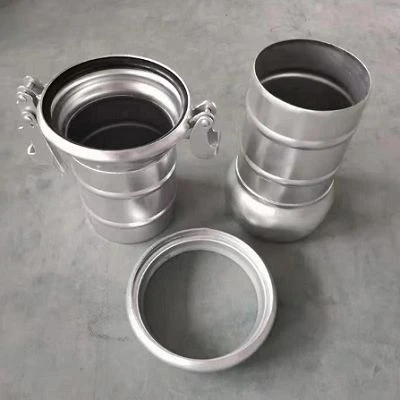
Now, let’s talk about how strainer type impacts this, because not all strainers are created equal. The three most common types are metal mesh strainers, plastic colanders, and silicone strainers—all of which can work for rice, but each has pros and cons. Metal mesh strainers, especially the ones we manufacture at our shop, are lightweight, durable, and come in varying mesh sizes. Our food-grade stainless steel mesh strainers, for example, have a flat base that sits perfectly in the sink, so you don’t have to hold it up the entire time you rinse rice. That’s a game-changer for anyone with a bad arm or who’s multi-tasking while cooking. Plastic colanders, while cheap and easy to store, tend to have larger holes and can scratch easily if you’re using utensils to scoop rice. We actually had a recent test where a popular budget plastic colander let 22% of white rice kernels slip through during a standard rinse, which is a number I can’t ignore. Silicone strainers are flexible, so they can fit over larger pots and bowls, but they’re less rigid, which means the mesh can sag when full of wet rice, letting kernels seep through the sides.
Wait a second—what about wild rice or other less common rice varieties? Those have larger kernels, right? Wild rice kernels are actually 10 to 12 millimeters long, so a coarser strainer with 3-millimeter holes will work fine here. But here’s a tip: wild rice is often dirty and has small, broken grains that can slip through. If you’re rinsing wild rice, a medium-mesh strainer (2.5 millimeters) will catch the broken bits while still letting water flow quickly. I also recommend giving the strainer a gentle shake as you rinse to ensure all the excess water comes out—this is especially important for brown rice, which has a tough outer bran layer that retains more water than white rice.
A lot of people ask me if they should use a strainer instead of a rice cooker’s built-in basket. The short answer is: it depends on your needs. If you’re cooking a small batch (1 to 2 cups of rice), a strainer works perfectly. If you’re cooking 5+ cups for a large family or event, a rice cooker basket is more efficient, but a large, heavy-duty metal strainer can work in a pinch. We supply strainers to a number of small catering businesses that use them for daily rice prep, because they’re easy to clean and don’t take up much storage space in a commercial kitchen.
Now, let’s address a common misconception: some people say using a strainer to strain rice makes it too dry or too sticky. That’s not the strainer’s fault—it’s about how you use it. If you rinse rice for too long (more than 2 minutes), you’ll remove too much starch and the grains will become dry and crumbly. If you don’t rinse it at all, you’ll have sticky, clumpy rice. A strainer helps with consistency because you can see exactly how the water is draining and stop once it runs clear, which is the sign that excess starch is gone. I always tell customers: when the water coming through the strainer is no longer cloudy, you’re done. No need to rinse for longer.
I’ve also seen some weird hacks online, like using a cheesecloth as a makeshift rice strainer. While this works in a pinch, cheesecloth is not designed for repeated use with wet rice. The fibers can break down over time, and small rice kernels can get stuck in the cloth, making it hard to clean. Plus, cheesecloth doesn’t drain as well as a purpose-built strainer, so you’ll end up with more water sitting in your rice. It’s a temporary fix, but not something I’d recommend for regular use.
Let’s talk about maintenance, because a strainer that’s not cared for won’t work well for rice. After each use, you should rinse the strainer immediately—if rice kernels get stuck in the mesh, they’ll harden and be almost impossible to remove. For metal strainers, we recommend hand-washing with warm, soapy water and a soft brush to scrub the mesh. If you have a food buildup, you can soak the strainer in a mixture of warm water and white vinegar for 10 minutes, then rinse. Plastic strainers can go in the dishwasher, but avoid high heat cycles, as this can warp the mesh and make holes larger over time. Silicone strainers are also dishwasher-safe, but again, high heat can damage the material.
Now, what are the signs that your strainer isn’t good for rice? If you notice kernels slipping through the holes, it’s time to replace it. Over time, metal mesh can bend or stretch, making holes larger. Plastic can crack, and silicone can tear. I always advise customers to check their strainer every few months—if it’s more than 2 years old, especially if you use it for rice regularly, it’s probably due for a replacement. Our strainers come with a 5-year warranty, because we’ve tested them to withstand thousands of rice rinses without stretching or bending.
I know a lot of home cooks are looking for budget options, and I get it. You don’t want to spend $20 on a strainer when you can get a plastic colander for $5. But here’s the thing: a cheap colander that lets rice slip through is costing you more in the long run. If you lose 20% of a $5 bag of rice every time you cook, that’s $1 a batch, which adds up to $50 a year for a family that cooks rice once a week. Our strainers are designed to minimize that loss, and they’re built to last, so you won’t have to replace them every year.
I also want to mention accessibility. A good strainer makes rice prep easier for people with limited hand strength, because you don’t have to hold it up for long periods. Our strainers have a wide, flat rim that fits securely in most kitchen sinks, so you can just set it there and rinse. For people who use wheelchairs or have trouble bending down, a strainer that works at sink height is a huge help. We’ve had multiple customers tell us that our strainers made cooking rice less stressful, because they didn’t have to worry about holding a heavy colander and spilling rice everywhere.
Wait, let’s get back to the original question: Can I use a strainer to strain rice? The answer is a resounding yes, as long as you pick the right one. If you’re using a strainer with holes that are too big, you’ll lose rice. If it’s too fine, you’ll waste time and end up with soggy rice. If it’s not durable, it’ll break after a few uses. But a purpose-built rice strainer (or a general-purpose strainer with the right mesh size) works perfectly for rinsing and straining rice, and it’s a staple in any kitchen.
I’ve seen people turn this into a big debate online, with some saying strainers are too fragile, others saying they’re the only way to get good rice. But after testing hundreds of strainers for rice use, I can tell you the sweet spot is there. It’s all about matching the strainer to the type of rice you’re cooking. For white long-grain and short-grain, go with a 1.5-millimeter mesh. For brown rice, stick with 2 millimeters. For wild rice, 2.5 millimeters works best.
As someone who’s in the strainer business, I’m not just here to sell you a product—I’m here to make your cooking easier. Rice is a staple food for half the world’s population, so having a reliable way to rinse and strain it should be simple. That’s why we design our strainers to work for exactly that: no complicated instructions, no fancy features, just a tool that gets the job done.

If you’re in the market for a strainer that’s perfect for straining rice, or if you’re a food service business looking to equip your kitchen with durable, efficient strainers, we’re here to help. We work with households, restaurants, caterers, and grocery stores, and we can customize solutions to fit your needs. Don’t settle for a strainer that lets your rice slip through or breaks after a few uses. Reach out to our team today to discuss your requirements and find the right strainer for your kitchen.
Camlock Coupling REFERENCES
- USDA Food Safety and Inspection Service. (2022). "Rinsing Rice: Best Practices for Home Cooks."
- Kitchen Equipment Manufacturers Association. (2021). "Mesh Size Standards for Kitchen Strainers."
- Journal of Culinary Science & Technology. (2020). "The Impact of Rinsing Methods on Rice Texture and Starch Content."
- Home Cookers Association. (2023). "Common Kitchen Tool Mistakes: Strainers and Rice Preparation."
Suzhou Fuyikang Metal Industrial Co., Ltd.
As one of the most professional strainer manufacturers and suppliers in China, we have world-leading production equipment and strong manufacturing capabilities. We warmly welcome you to buy bulk high quality strainer for sale here from our factory.
Address: No.26.Mudong Rd,Mudu Town, Wuzhong Distric, Suzhou City,Jiangsu Province,China
E-mail: SZFYK@SZFUYIKANG-COUPLING.COM
WebSite: https://www.fyk-coupling.com/
