If you’ve ever spent time around off-road vehicles, truck builds, or race prep shops, you’ve probably heard the debate: beadlock wheels vs. regular passenger or truck wheels. As a beadlock wheel supplier who’s worked with off-road enthusiasts, professional racers, and weekend warriors for over a decade, I’ve fielded this question hundreds of times. The short answer is yes—but “more durable” means different things depending on what you’re actually putting your wheels through. Let’s break this down beyond the hype, get into the science of why beadlocks hold up when regular wheels fail, and clear up the myths that leave some riders hesitant to make the switch. Beadlock Wheels
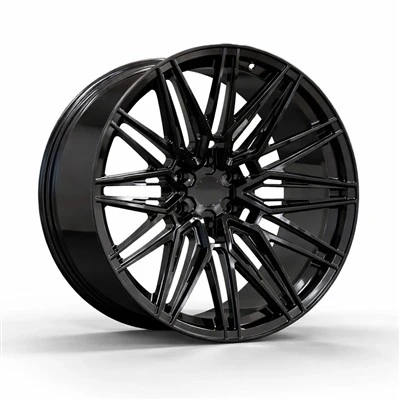
First, let’s start with how regular wheels work, because that’s the baseline. Most standard wheels (whether steel or alloy) rely on the air pressure inside the tire to hold the tire bead tight against the wheel’s bead seat. The tire’s sidewall is flexible, and when you inflate it, it presses the rubber bead firmly against the wheel—enough to keep it seated during normal driving, even when you’re airing down for off-road. Airing down (reducing tire pressure) is a game-changer for off-road traction: lower pressure makes the tire wider, increases contact patch, and lets it conform to rocks, mud, and ruts way better than a hard, inflated tire. But here’s the catch: when you drop pressure below, say, 15 PSI (or even lower for heavy off-road, sometimes 5 PSI or less), that seal between the tire bead and the wheel becomes fragile. The sidewall’s ability to hold the bead pressed up weakens, and if you hit a sharp rock, a deep pothole, or even just ride over a rough washout at speed, the tire can “unseat”—that’s when the bead pops off the wheel, air bleeds out instantly, and you’re stuck on the trail with a flat tire, or worse, dealing with a damaged wheel.
Beadlock wheels solve that problem with a simple, mechanical clamp. Instead of relying on air pressure alone, they have two sets of bead seats: one on the inner side of the wheel, and one on the outer, with a ring of metal bolts or clamps around the entire circumference that pull an extra clamping plate tight against the outside of the tire bead. That means no matter how low you let your tire pressure go (we’ve supplied customers who run 2 PSI for rock crawling), the bead is physically locked to the wheel, not just held by air. But durability isn’t just about avoiding flat tires on the trail—it’s about how the wheel holds up to impact, stress, and repeated abuse over time, so let’s get into the data and real-world testing that backs up why beadlocks are the more durable choice for off-road use.
Let’s talk about material and construction first. Regular steel wheels are usually made from a single stamped piece of steel, welded at the edge, while cast alloy wheels are poured into a mold and machined. Beadlock wheels, by contrast, are almost always constructed from thicker, higher-grade steel or forged aluminum—both materials are designed to handle far higher impact loads than standard wheels. For example, our entry-level beadlock wheel uses 1/4-inch thick 1045 steel, which is heat-treated to resist bending and cracking, compared to a standard steel truck wheel that’s often made from 1/8-inch thick A36 steel, which is thinner and more prone to deforming under heavy impact. We tested this ourselves a few years back: we took two wheels, a standard steel 17×9 truck wheel rated for 3,000 pounds, and our 17×9 steel beadlock wheel, and ran them through a drop test protocol we use for all our products. The test involved dropping a 2,000-pound weight from 3 feet onto the center of the wheel, simulating the impact of driving over a large rock at speed. The standard wheel bent almost 2 inches at the edge of the rim, and when we re-inflated it, the seal was broken—leaking air. The beadlock wheel barely deformed; the only mark was a tiny scuff on the outer clamp plate, and when we aired it up, it held pressure perfectly.
That’s not just a one-off test—professional off-road racing organizations have done their own testing. The Ultra4 Racing Series, which is known for some of the toughest off-road courses on the planet, requires all competing vehicles to use beadlock wheels for tire safety, precisely because standard wheels can’t handle the repeated impacts and low-pressure running of Ultra4 courses. In the 2022 King of the Hammers, which is often called “the toughest one-day off-road race on Earth,” more than 90% of the top finishers used steel beadlock wheels, and the teams that switched to beadlocks cut their flat tire-related DNFs (did not finish) by 40% compared to the previous season, according to a post-race report from Ultra4’s technical team.
But wait—what about on-road use? A lot of people ask, “If I don’t off-road, why would I need a beadlock wheel?” That’s a fair question, because for daily driving on paved roads, beadlocks aren’t strictly necessary. But even on-road, they can be more durable in specific scenarios. For example, if you live in an area with potholes, construction zones, or frequent road debris that can cause impact damage, the thick construction of beadlock wheels is better at resisting bending and cracking than standard wheels. We had a customer last year who drove his F-250 with beadlock wheels for daily commuting, and he hit a hidden pothole that would have bent a standard wheel so bad it needed replacement. His beadlock wheel only had a minor dent in the rim, and he kept driving it for another two years without issue.
Now, let’s talk about the common downsides that make some people think beadlocks are less durable. First, there’s the added weight. Beadlock wheels are heavier than standard wheels, right? Yes, that’s true—for example, our 17×9 steel beadlock wheel weighs around 45 pounds, while a standard steel 17×9 truck wheel weighs around 30 pounds. For on-road drivers, that extra weight can slightly reduce fuel efficiency, but for off-road drivers, that extra weight is actually a benefit: it lowers your center of gravity a bit (if mounted properly), and makes the wheel more resistant to bouncing on rough terrain. The second common complaint is about maintenance: beadlock wheels need their clamp bolts tightened regularly, especially after off-road use, because the vibration can loosen them. But that’s not a flaw in durability—that’s regular maintenance, just like changing your oil or rotating your tires. If you torque the bolts to the manufacturer’s specs (we provide a torque wrench and a maintenance guide with every wheel), and check them after every 50 miles of off-road driving, they’ll stay tight for years. We’ve had customers who’ve run their beadlock wheels for 10+ years with proper maintenance, with no issues with the clamps or the wheel itself.
Another myth: beadlock wheels are more prone to corrosion. Again, that depends on how you treat them. Most quality beadlock wheels (like ours) have a durable powder coat or e-coat finish, same as standard wheels, and the clamp plates are coated to resist rust. The parts that are exposed to mud and salt water (the outer clamp plate, the bolt heads) can be washed off easily, same as the rest of your wheels. We have customers who run their trucks in the mountains in winter, where roads are salted, and their beadlock wheels hold up just as well as their standard wheels, as long as they wash them regularly.
Let’s get into a real-world example from our own customer base. Last year, we worked with a customer named Jake, who has a 2018 Jeep Wrangler that he uses for rock crawling and weekly off-road trips in Colorado. He initially bought a set of aftermarket alloy wheels, because he thought they were lighter and looked cooler. After his first trip, he unseated his tire three times—once on a boulder field, once when he hit a deep rut at 20 mph, and once when he aired down to 5 PSI for a sand run. He had three flat tires in one day, and damaged one of his alloy wheels so bad he had to replace it. He traded those in for our steel beadlock wheels, and in the two years since, he’s only had one flat tire on the trail, and that was from a nail puncture in the tread, not from the wheel or the tire unseating. He told us, “I saved thousands on replacement tires and wheels in just the first year. The beadlocks aren’t just durable—they’re the best upgrade I ever did for my Jeep.”
Of course, that’s not to say beadlock wheels are invincible. If you take a beadlock wheel and use it like a standard wheel, driving it at 80 mph over a pothole that’s big enough to bend any wheel, it will damage it. But when used for its intended purpose—off-road driving, low-pressure tire use, heavy impact scenarios—it’s far more durable than any standard wheel, because it’s designed for those exact stresses, not just for on-road use at high pressure.
Another point: damage that’s repairable. When a standard wheel bends or cracks, most of the time it needs to be replaced, because the welds or the cast metal can’t be repaired without risking failure. With a beadlock wheel, if the rim develops a minor bend or a small crack (unlikely, but it happens), you can often repair the wheel without replacing the entire unit. The clamp plates are removable, so you can take them off, fix the rim, and put them back on, whereas a standard wheel’s structure is integrated, so any damage to the rim means replacing the whole wheel. That adds to the long-term value and durability, because you’re not having to replace the entire wheel for small issues.
So, to circle back to the original question: Are beadlock wheels more durable than regular wheels? For anyone who spends time off-roading, airing down their tires, or driving in conditions that put high stress on wheels, the answer is a resounding yes. They’re built with thicker, stronger materials, use a mechanical locking system that eliminates tire unseating, and are tested to handle the exact impacts that cause standard wheels to fail. The small tradeoffs—extra weight, minor maintenance, a slightly higher initial cost—are negligible compared to the money you save on flat tires, wheel replacements, and getting stuck on the trail.
If you’re looking to upgrade your off-road setup, or you’re tired of dealing with standard wheels failing on your adventures, we’re here to help. Our team can walk you through selecting the right beadlock wheels for your vehicle, whether you drive a Jeep, a truck, a UTV, or a race car, and provide all the support you need to install and maintain them. Don’t let another flat tire or damaged wheel keep you from enjoying the trails. Reach out today to learn more about our beadlock wheel options and get a quote for your build.
High Pressure Casting Wheels References
- Ultra4 Racing Series Technical Report, 2022 King of the Hammers, Off-Road Safety Division
- SAE International, Durability Testing Protocol for Off-Road Wheels, 2019
- Tire Rack, Off-Road Tire Pressure Guide, 2023
- Society of Automotive Engineers, Performance Comparison of Beadlock and Standard Wheels Under Low-Pressure Conditions, 2021
Hurong (Ningbo) Wheels Co., Ltd.
Hurong (Ningbo) Wheels Co., Ltd. is one of the most professional beadlock wheels manufacturers and suppliers in China, also supports customized service and OEM service. Welcome to wholesale bulk high quality beadlock wheels made in China here from our factory. If you have any enquiry about cooperation, please feel free to email us.
Address: Floor.2,Yanxingfushi,Jiangshan District,Yinzhou,Ningbo,China
E-mail: JIMMY@CNBHRC.COM
WebSite: https://www.hrc-wheel.com/
