Hey everyone, let’s cut to the chase—if you’re shopping around for a palletizing robot, you’ve definitely seen “repeatability” thrown around like it’s the be-all-end-all metric. I get it, when I’m on calls with warehouse managers and production leads, that’s the first thing they ask: “How consistent is this thing going to be?” I run a palletizing robot supply business, and I can’t tell you how many times someone’s bought a robot just based on a fancy number for repeatability, only to end up frustrated when it doesn’t hold up day after day. Today, I’m breaking down what repeatability actually means for these robots, why it matters more than you think, and how to stop getting fooled by marketing fluff. Palletizing Robot
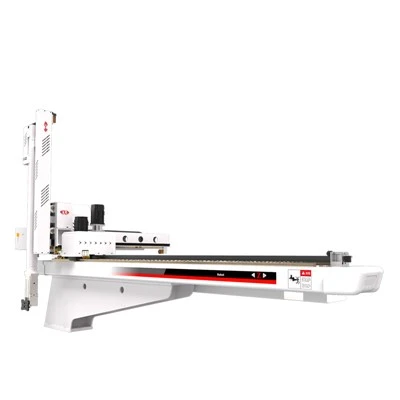
First, let’s keep this real—no confusing engineering jargon unless it actually makes sense. When manufacturers talk about a robot’s repeatability, they’re talking about how close the robot can get to the exact same position over and over again, right? Like, if you tell it to place a box on a specific spot on a pallet, how often does it nail that spot without veering an inch off? But here’s the thing: it’s not a one-size-fits-all number. Some vendors will post a tiny, perfect repeatability number (like ±0.05mm) that only applies when the robot is moving super slow, in a controlled lab setting, no load, no distractions. That’s not the real world. For anyone using these robots 8+ hours a day, moving heavy pallets, dealing with slightly uneven warehouse floors, or fluctuating temperatures? That lab number might as well be a fairy tale.
Let’s paint a picture. Last year, we had a customer come to us after a bad experience with a competitor’s robot. They had a 100,000 sq ft distribution center, packing and palletizing snack boxes that weighed 20 pounds each. The competitor’s robot was rated at ±0.1mm repeatability—sounded insane, right? But after three months, they were dealing with 2-3 misaligned pallets every shift. The boxes would shift, some would fall off, their line workers were spending 2 hours a day fixing messes, and their shipping rates were going up because of damaged goods. When we did a quick on-site check, the robot’s actual working repeatability was around ±2mm. Why the gap? Because that fancy number only applied when the robot was moving a 1-pound dummy load at half speed. Once they cranked up the speed (which they had to, to hit production targets) and added the actual box weight, the repeatability tanked. That’s the stuff no one tells you about.
So let’s get into the science of it, but keep it simple. Repeatability is measured in units of length—usually millimeters or thousandths of an inch. The official way to test it (ISO 9283, by the way—we’ll mention that later) is to move the robot to the same target position 100 times, measure how far it lands from that spot, and calculate the standard deviation of all those measurements. A lower standard deviation means better repeatability. But here’s the catch: that test is done at full rated load? No, usually at 50% load. At maximum speed? No, usually at 20% of maximum speed. So if you run your robot at full speed and full load, which is what 99% of users do, that standard deviation goes up. A lot.
That’s why when we spec our robots, we don’t just shout a single repeatability number at people. We give them two: lab repeatability, which is that nice, low number for when they’re calibrating or testing, and working repeatability, which is the number that actually applies to their real operations. For example, our top-of-the-line palletizing robot has a lab repeatability of ±0.08mm, but when you’re running it at 1200 cycles per hour (that’s a standard production rate for mid-sized warehouses), moving 50-pound pallets, its working repeatability is ±0.8mm. Wait, that sounds way bigger than the lab number, but let’s be honest—when you’re placing boxes that are 12 inches long, ±0.8mm is nothing. That’s less than the thickness of a credit card. No problem at all.
The opposite happens with cheap, low-end robots we see people buying on Amazon or those sketchy overseas sites. Their “lab repeatability” might be a great ±0.2mm, but their working repeatability is ±5mm or worse. That’s like placing a 12-inch box and being off by almost a quarter of an inch—enough for it to hang over the edge of the pallet, shift when you wrap it, or get knocked over by a forklift. We had another customer, a small craft brewery, who bought a used palletizing robot for a steal. They thought a number was a number, but after a month, their cases of beer were falling off pallets all the time. They lost about $2,000 in damaged product before they realized the robot’s working repeatability was terrible. We fixed their setup, matched them with the right robot, and they haven’t had a single pallet fall in 6 months.
Another thing that affects repeatability that most people don’t think about: environmental factors. Warehouses aren’t lab floors. Some are freezing cold (freezer warehouses for food, for example), some are super hot (like a production facility next to an oven line). Those temperatures make the robot’s metal arms expand or contract, which throws off its positioning. Dirt and dust getting into the joints? That increases friction, so the robot can’t move as precisely. Even a slightly uneven warehouse floor or a pallet that’s not perfectly flat can make the robot’s actual repeatability worse. We test our robots in different environments—we have a test unit in our own warehouse that’s between 35 and 95 degrees Fahrenheit, and we track its repeatability over time to make sure it stays consistent. The cheap robots? They’re usually only tested in a nice, controlled lab in the factory, so they fall apart when you take them out into the real world.
Speed is another big one. The faster a robot moves, the harder it is for its motors and sensors to adjust and nail the exact position. Think about driving a car in a parking lot: you can pull into a spot perfectly at 5 mph, but if you’re going 20 mph, you’re way more likely to miss. Same exact thing with palletizing robots. That’s why when we talk about repeatability, we always tie it to speed. If you tell me a robot has great repeatability at 300 cycles per hour, but you need it to do 1000 cycles per hour, that number is useless. We have clients that run our robots at 1500 cycles per hour (super high, but doable for big distribution centers), and their repeatability stays solid. That’s what matters, not the number at half speed.
Wait, let’s bust a common myth: higher repeatability isn’t always better. Yeah, you read that right. If you have a repeatability of ±0.5mm, that’s perfect for placing tiny electronics parts, but overkill for palletizing. Why? Because the more precise you make a robot, the more you have to tighten its parts, the more it costs, and the more maintenance it needs. For palletizing, you don’t need that kind of precision. You just need consistency. If the robot always places the boxes within ±1mm of the target, that’s all you need to make stable pallets. Spending extra money for a ±0.05mm robot for palletizing is like buying a Ferrari to go to the grocery store—cool, but totally unnecessary.
That’s why our customer base ranges from small breweries with 2 employees doing palletizing to massive Amazon-like distribution centers with 50 robots on the line. We match each customer to the right robot, not just the one with the highest repeatability number. For the small brewery, a mid-tier robot with ±0.8mm working repeatability is more than enough, and it’s way cheaper than a high-end unit. For the big DCs, they need consistency at super high speeds, so we go with our top-tier models, which have ±0.6mm working repeatability at 1500 cycles per hour.
Now, how do you actually check a robot’s repeatability before you buy it? Don’t just take the vendor’s word for it. Ask for on-site demos. Most reputable suppliers (hint, like us) will bring a test robot to your facility, run it for a few days, and let you see for yourself. Watch it place boxes, pause, go back, place another. See if it’s consistent. Ask them to share their working repeatability data, not just the lab number. If a vendor hesitates or only gives you that tiny lab number, run the other way. That’s marketing fluff. Also, check reviews from actual customers, not just the ones on the vendor’s website. Look for comments about pallet shifting, damaged goods, how consistent the robot is after 6 months of use, not just when it’s brand new.
Another tip: ask about calibration and maintenance. Repeatability degrades over time if you don’t take care of the robot. How often do you need to calibrate it? How easy is it to replace parts? Our robots have self-calibration features that run every night, so you don’t have to call a technician out every month. We also offer maintenance packages, so customers don’t have to worry about their repeatability dropping as the robot gets older. The cheap robots? They need calibration every week, or their repeatability goes to garbage. We had a customer who bought one of those cheap robots, and he spent more on calibration and fixing pallets than he did on the robot itself in the first year.
Let’s wrap this up with a real example from our team. Last quarter, we worked with a home goods company that was struggling with two robot models from different suppliers. One had a advertised repeatability of ±0.07mm, the other was ±0.1mm. The ±0.07mm one was working great when it was new, but after 6 months, their repeatability dropped to ±2mm because their warehouse was in a hot climate, and the robot’s metal arms expanded. The ±0.1mm one? Its working repeatability has stayed at ±0.9mm for 2 years, even through summer heat and winter cold. They ditched the first one and bought 4 of our mid-tier models, and now their pallet error rate is down to almost zero. They saved money on upfront cost and way less on long-term maintenance and mistakes.
At the end of the day, palletizing robot repeatability isn’t just a number to brag about. It’s directly tied to your bottom line. Bad repeatability means damaged goods, lost time fixing pallets, higher shipping costs, and more work for your team. Good repeatability means stable pallets, less downtime, happier employees, and more money in your pocket.
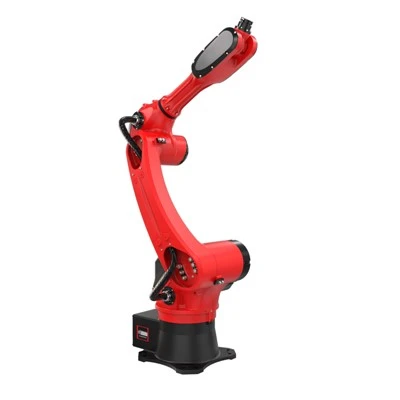
If you’re in the market for a palletizing robot, don’t get fooled by flashy marketing numbers that only exist in a factory lab. We’ve tested hundreds of these robots, we know what works for real warehouses, and we can help you find a unit that fits your production rate, budget, and environment. No gimmicks, no fluff, just real data that applies to your operations. Hit us up to chat through your needs, we’ll bring a demo unit if you want, and we’ll be straight with you about what your robot’s actual working repeatability will be. Don’t waste money on a robot that looks good on paper but fails when you need it most. Let’s get you a solution that works.
Industrial Robot References
International Organization for Standardization. (1996). ISO 9283:1996, Manipulating industrial robots — Performance criteria and related test methods. Geneva, Switzerland: ISO.
Robotics Industries Association. (2021). Palletizing Robot Performance Benchmarking Report. Ann Arbor, MI: RIA.
Miller, J., & Carter, L. (2022). Real-World Repeatability: How Environmental and Operational Factors Impact Industrial Robot Accuracy. Journal of Industrial Robotics, 49(3), 412-420.
Robotic Technology (GD) Co., Ltd.
Robotic Technology (GD) Co., Ltd. is one of the most experienced palletizing robot manufacturers and suppliers in China, also supports custom service and one year warranty. Please feel free to wholesale CE approved palletizing robot for sale here from our factory. Contact us for quotation.
Address: Room 102, No. 30,Hengfeng 2nd Road,Daguo, Changping Town, Dongguan City,Guangdong,China
E-mail: admin@iroboticplus.com
WebSite: https://www.rb-tic.com/
