If you’ve ever been in the market for DC motors, chances are you’ve heard the term “closed-loop control” thrown around a lot. And if you’re using a motor for something that needs consistent, reliable performance—like an automated conveyor, a robotic arm, or even a 3D printer—this isn’t just some tech jargon. It’s the difference between your machine working smoothly all day long and spitting out errors because of a tiny speed or position hiccup. As a DC motor supplier, I field questions about this every single week, so let’s break it down like we’re chatting over coffee, no stuffy engineering degree required. DC Motor
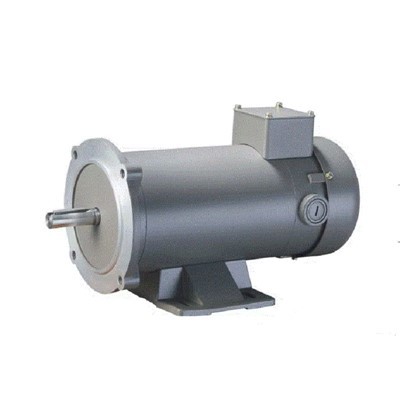
First, let’s start with the basics: what’s a DC motor, and why would you need to control it in the first place? A DC motor runs on direct current, right—so it’s super common for all kinds of small to medium-duty applications. But if you just hook it up straight to a power source, it’ll spin at whatever speed the voltage gives it, no adjustments. That’s open-loop control, and it’s fine for simple stuff like a box fan or a toy car, where you don’t need exact speed or position. But for anything that matters? Open-loop is a ticking time bomb. If the load on the motor changes—say, a conveyor has a heavier box slide onto it, or a robotic gripper is holding a part that’s a little thicker—the motor will slow down (or speed up) without you even knowing. Suddenly your 3D print layer is off, your conveyor is jammed, or your robot misses its target. That’s where closed-loop control comes in.
Closed-loop control is basically a system that checks in on the motor constantly, compares what it’s doing to what it should be doing, and fixes any mistakes before they cause problems. Think of it like driving a car. If you’re going 60 mph on the highway, you don’t just step on the gas and hope for the best. You glance at the speedometer (that’s your “feedback”), notice if you drop to 58 because of a hill, and press the gas a little more to get back to 60. If you speed up to 62, you lift a little off the gas. The speedometer, your brain, and your foot working together is exactly how a DC motor closed-loop system works.
Now, let’s get into the parts that make this happen, because that’s where most people get confused. The core of any closed-loop DC motor system is the feedback device. The two most common ones are encoders and resolvers, and as a supplier, I can tell you which ones work best for which jobs. Encoders are the go-to for most medium-duty applications—they’re smaller, cheaper, and give super precise position and speed data. They work by sending pulses every time the motor spins a little; more pulses mean faster speed, or more rotation means more position. Resolvers are for harsher environments—like factories with lots of dust, vibration, or extreme temperatures—because they’re way more durable than encoders and don’t get messed up by harsh conditions. We stock both, so I can help you pick which fits your project.
Next up is the controller. That’s the brain of the whole operation. It takes the signal from the feedback device, compares it to the “setpoint” you want (like “100 RPM” or “spin 10 full turns”), and sends a signal to the motor to adjust. For DC motors specifically, the most common controller here is an H-bridge, or a pulse-width modulation (PWM) controller. PWM is basically turning the power on and off really fast—like 10,000 times a second—so the motor doesn’t just jerk on and off. The longer the power is on, the faster the motor spins; shorter on time means slower. The controller tweaks that on/off ratio in microseconds if it sees a speed drop or position error, so you barely notice the adjustment.
Let’s use a real example to make this concrete. Say you’re building an automated label applicator that needs to stick labels exactly every 12 inches on a moving package line. Without closed-loop control, if the line speeds up a little, the labels would be applied too far apart. With closed-loop: the DC motor driving the label roll has an encoder on its shaft. The controller is set to tell the motor to spin exactly enough to feed 12 inches of label. The encoder sends a pulse to the controller every time the motor spins; if the line speeds up and the motor only spins enough for 11 inches, the controller gets that feedback, cranks up the voltage a tiny bit, and the motor speeds up just enough to hit 12 inches. No more misaligned labels, no more waste from redoing jobs—that’s the magic of closed-loop.
Wait, but why does this matter so much for DC motors specifically? DC motors are great because they have high torque at low speeds, are easy to control, and are cheaper than other motor types for many applications. But their speed is affected by two big things: load and voltage fluctuations. If your power supply dips a little, the motor will slow down, even if the load doesn’t change. If you put a heavier load on it, same thing. Closed-loop control cancels both of those out. That’s why we sell so many closed-loop DC motors for industrial automation—they solve those exact headaches without you having to design the whole system from scratch.
I’ve seen first-hand what happens when people skip closed-loop control and go for open-loop to save a few bucks. Last year, a small robotics startup came to us because their prototype gripper was dropping parts. Turns out they were using an open-loop DC motor: when the gripper picked up a slightly heavier component, the motor couldn’t generate enough torque (because it was slowing down under load) so it released the part too early. We swapped them a closed-loop DC motor with an encoder, and they fixed the issue instantly. It’s not that open-loop motors are bad—they just aren’t for precise, variable-load jobs.
Now, let’s talk about common myths I hear all the time. First myth: “Closed-loop control is only for super fancy, expensive projects.” No way. We have closed-loop DC motors that fit into small consumer devices, like advanced camera gimbals that keep your shot steady even when you’re walking. They’re affordable, and the payoff in consistency is worth every penny. Second myth: “I can just add an encoder to my existing DC motor instead of buying a closed-loop one.” You can, but you have to make sure the encoder is compatible with your motor, the controller can handle the feedback signal, and you have the space to mount it. A lot of people run into fit issues or signal interference, which defeats the purpose. Buying a pre-built closed-loop DC motor is just easier, and we can customize the setpoints to match exactly what you need.
Another thing to note: closed-loop control isn’t perfect, but it’s way better than open-loop. The big benefits here are accuracy and repeatability. You can count on the motor to hit the same speed or position every single time, even if conditions change. That’s non-negotiable for automation, where consistency means less downtime, less waste, and more productivity. The only downside is a tiny bit more complexity and cost, but when you’re running a business, the cost savings from not having to fix errors or redo jobs quickly outweighs that small upfront cost.
As a DC motor supplier, my job isn’t just to sell motors—it’s to help you figure out what kind is right for your project. If you’re not sure whether you need closed-loop control, ask yourself one question: do I need this motor to do the exact same thing, every time, even if the load or power changes? If the answer is yes, closed-loop is the way to go. We carry a range of closed-loop DC motors, from small NEMA 17 ones for 3D printers to larger 24V models for conveyor systems, and we can help you pick the right size, torque rating, and feedback device for your specific application.
I talk to clients all the time who come in thinking they need a more expensive motor type (like a stepper or servo) when a closed-loop DC motor would work perfectly. Steppers can lose steps if under load, servos are overkill for many mid-sized jobs, but DC motors with closed-loop control hit that sweet spot: reliable, affordable, and precise enough for most industrial and commercial uses. We’ve even customized closed-loop DC motors for niche applications, like solar trackers that need to follow the sun exactly, so I’m happy to work on custom projects too.
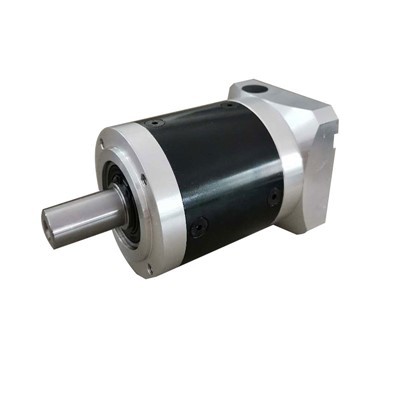
If you’re working on a project where consistent performance is key, don’t cut corners on the motor control. Open-loop might seem cheaper now, but you’ll end up paying for it later in repairs, wasted materials, and lost productivity. A closed-loop DC motor is an investment in smooth, reliable operation, and as a supplier, we’ve got the stock and expertise to help you get set up right.
Brushless Motor Whether you’re building a new automation line, prototyping a robotic device, or upgrading an existing system, understanding closed-loop control for DC motors will help you make a smarter choice. If you’ve got questions about which motor is right for your project, or want to chat about your specific needs, feel free to reach out. We’re here to help you get the right motor for the job, no jargon, no hassle.
References
- DC Motor Control: Theory and Practice, 2nd Edition, CRC Press
- Industrial Automation Motors and Controls, ISA Publications
- Applied Mechatronics: DC Motors and Control Systems, McGraw-Hill Education
- NEMA Standards for DC Motor Performance and Control, National Electrical Manufacturers Association
- Encoder and Resolver Technology for Motion Control, Motion Control Association
Zibo Auric Mechanical and Electrical Technology Co., Ltd.
As one of the leading dc motor manufacturers and suppliers in China, we warmly welcome you to buy advanced dc motor for sale here from our factory. All customized motors are with high quality and competitive price.
Address: B419, High-tech Entrepreneurship Park, High-tech Zone, Zibo City
E-mail: cui@auricmotor.com
WebSite: https://www.auricmotor.com/
