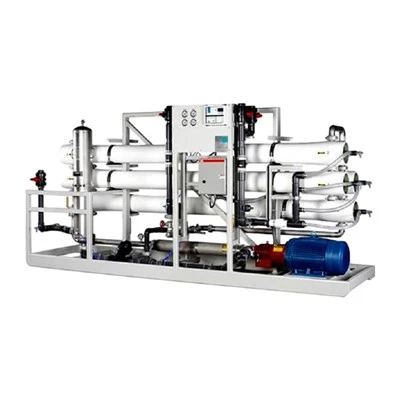
The scarcity of freshwater resources has become a critical global issue, and seawater desalination presents a promising solution. As a leading supplier of High Rejection Reverse Osmosis (RO) Membranes, I’ve witnessed firsthand the transformative impact these membranes have on seawater desalination. In this blog, I will delve into the performance of High Rejection RO Membranes in seawater desalination, shedding light on their key features, advantages, and real – world applications. High Rejection RO Membrane
The Principle behind High Rejection RO Membranes
Before delving into their performance, it’s essential to understand the basic principle of RO membranes. Reverse osmosis is a process in which pressure is applied to the saline side of a semi – permeable membrane, forcing water molecules to pass through while retaining dissolved salts and other impurities. High Rejection RO Membranes are engineered to have a very high selectivity. This means they can block a large percentage of the various contaminants in seawater, such as sodium chloride, magnesium sulfate, and other trace elements.
The performance of an RO membrane is commonly measured by its rejection rate. This ratio reflects the proportion of salts and impurities that the membrane can hold back. For High Rejection RO Membranes, rejection rates for major salts like sodium chloride can often exceed 99%. This high rejection rate is achieved through a combination of advanced membrane material science and precise manufacturing processes. The membrane material is typically a thin – film composite, which consists of a thin polymer layer supported by a porous sub – structure. The thin polymer layer acts as the main barrier for salt rejection, while the porous sub – structure provides mechanical support to withstand the high pressures required in seawater desalination.
Key Performance Metrics in Seawater Desalination
Salt Rejection
As mentioned above, salt rejection is one of the most crucial performance indicators. In seawater, which has an average salinity of about 35,000 ppm (parts per million), a high – rejection RO membrane can reduce the salt content in the permeate water to a very low level, usually below 500 ppm, making it suitable for various applications such as drinking water supply and industrial use. The high salt rejection ability is not only important for producing potable water but also for protecting downstream equipment from corrosion and fouling that can be caused by high – salt content water.
Water Flux
Water flux refers to the volume of water that passes through the membrane per unit area and per unit time. In seawater desalination, a high water flux is desirable as it allows for a greater amount of freshwater to be produced in a given period. High Rejection RO Membranes are designed to maintain a relatively high water flux even under high – pressure conditions. However, achieving a balance between high salt rejection and high water flux is a complex engineering challenge. Membrane manufacturers often optimize the membrane structure and surface properties to enhance both salt rejection and water flux simultaneously.
Fouling Resistance
Fouling is a significant problem in seawater desalination that can reduce membrane performance and increase operating costs. Organic and inorganic substances in seawater, such as algae, bacteria, colloids, and scaling agents, can accumulate on the membrane surface and inside the pores, leading to reduced water flux and salt rejection. High Rejection RO Membranes are engineered with anti – fouling properties. This can be achieved through surface modification techniques, such as coating the membrane surface with hydrophilic or charged polymers. These modifications prevent the attachment and growth of contaminants on the membrane surface, allowing the membrane to operate efficiently for a longer period of time with fewer cleaning cycles.
Chemical Resistance
Seawater contains a variety of chemicals and pollutants, including acids, bases, and oxidizing agents. High Rejection RO Membranes need to have good chemical resistance to withstand the harsh chemical environment during the desalination process. Manufacturers typically select materials and additives that are resistant to chemical degradation. For example, the membrane materials are formulated to be stable in the presence of chlorine, which is often used as a disinfectant in the pre – treatment of seawater. This chemical resistance ensures the long – term durability and performance of the membranes in seawater desalination plants.
Advantages of Using High Rejection RO Membranes in Seawater Desalination
High – Quality Freshwater Production
The most significant advantage is the ability to produce high – quality freshwater from seawater. With a high salt rejection rate, the permeate water obtained from seawater desalination using these membranes meets the strict standards for drinking water and many industrial applications. This reliable source of freshwater is crucial in regions facing water shortages, helping to alleviate water stress and support economic development.
Energy Efficiency
Compared to some other desalination methods, such as multi – stage flash distillation, reverse osmosis with High Rejection RO Membranes is relatively energy – efficient. Although high pressure is required to drive the reverse osmosis process, the advancement in membrane technology has reduced the energy consumption per unit of freshwater produced. The high water flux of these membranes means that a larger volume of water can be processed with less energy input, making seawater desalination more economically viable.
Compact Design
High Rejection RO Membranes allow for a more compact desalination plant design. Since they can achieve high water production rates in a relatively small membrane area, the overall footprint of the desalination facility can be reduced. This is particularly beneficial in coastal areas where land is often scarce and expensive. Additionally, the compact design reduces construction and maintenance costs.
Flexibility
These membranes can be integrated into different types of seawater desalination systems, whether it’s a large – scale industrial plant or a small – scale decentralized unit. Their modular design allows for easy scaling up or down according to the specific water demand. This flexibility makes High Rejection RO Membranes a suitable choice for a wide range of applications, from providing water for small communities to supporting large – scale industrial operations.
Real – World Applications
High Rejection RO Membranes are widely used in seawater desalination plants around the world. In the Middle East, where water scarcity is a chronic problem, many large – scale desalination plants rely on these membranes to produce billions of liters of freshwater every day. These plants supply drinking water to major cities, support the growth of industries such as oil and gas, and ensure the well – being of the local population.
In addition to the Middle East, countries in North Africa, Australia, and parts of the United States also use High Rejection RO Membranes in their seawater desalination projects. In Australia, for example, with its large arid and semi – arid regions, seawater desalination has become an important part of the water supply strategy. The use of high – performance RO membranes has made it possible to convert seawater into a reliable source of freshwater for both urban and agricultural needs.
Moreover, the portability and flexibility of High Rejection RO Membrane – based desalination systems make them suitable for emergency water supply in disaster – stricken areas. In the aftermath of natural disasters such as tsunamis or hurricanes, these systems can be quickly deployed to provide clean drinking water to affected populations.
Conclusion and Call for Collaboration
In conclusion, High Rejection RO Membranes play a central role in seawater desalination. Their excellent performance in terms of salt rejection, water flux, fouling resistance, and chemical resistance makes them a reliable and efficient solution for addressing the global water shortage problem. The advantages of high – quality freshwater production, energy efficiency, compact design, and flexibility have made these membranes indispensable in both large – scale and small – scale desalination applications.
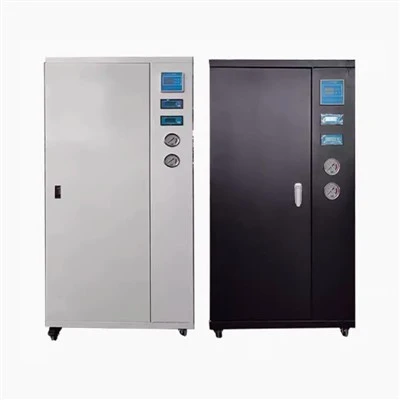
Commercial RO System As a supplier of High Rejection RO Membranes, I am committed to providing high – quality products and excellent technical support. Our membranes are manufactured using the latest technologies and materials, ensuring optimal performance and long – term durability. If you are involved in seawater desalination projects, whether it’s for a new plant construction or an existing plant upgrade, I would encourage you to contact us for a detailed discussion. We can work with you to select the most suitable membrane products based on your specific requirements and help you achieve the best results in your desalination operations.
References
- Elimelech, M., & Phillip, W. A. (2011). The future of seawater desalination: energy, technology, and the environment. Science, 333(6043), 712 – 717.
- Nghiem, L. D., Schäfer, A. I., & Elimelech, M. (2012). A review of reverse osmosis membrane materials for desalination—Development to date and future potential. Journal of Membrane Science, 411 – 412, 1 – 22.
- Williams, R. A., & Cannon, R. M. (2009). Sustainability of desalination as a source of freshwater: A review of energy requirements. Desalination and Water Treatment, 7(1 – 3), 1 – 5.
Fujian Huamo Technology Co., Ltd.
Fujian Huamo Technology Co., Ltd. is one of the most professional high rejection ro membrane manufacturers and suppliers in China, featured by quality products and good service. Please rest assured to wholesale the best high rejection ro membrane made in China here and get price list from our factory. Contact us for custom service and OEM service.
Address: No.6 Hengtong Rd, Shanmei Village, Xiamei Town, Nanan City, Fujian Province, China
E-mail: info@huaromembrane.com
WebSite: https://www.hmromembrane.com/
